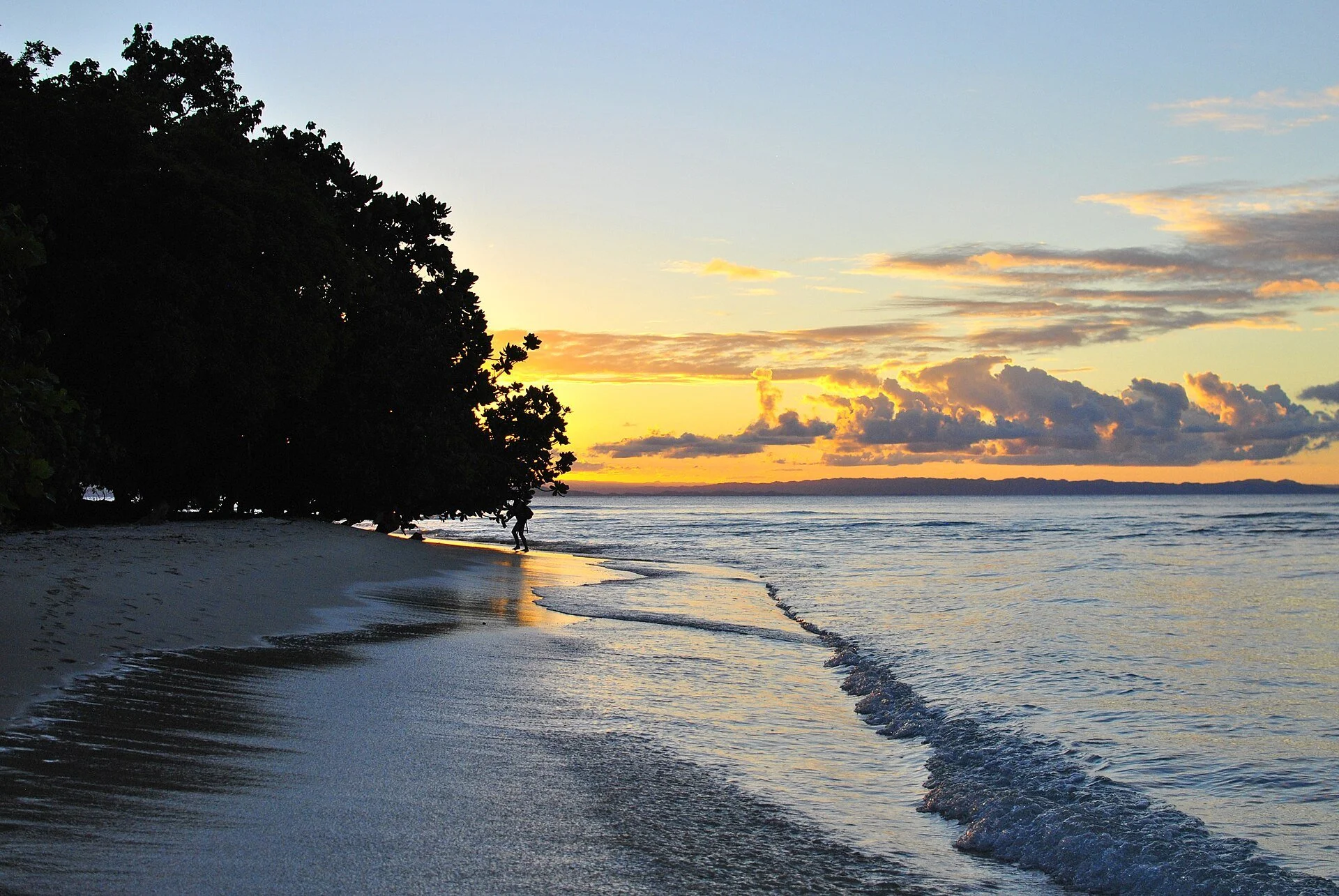
A coastal beach town of Madagascar that is frequented by tourists. Tours by local workers are often given on these beaches for foreign visitors.
Photo Credit: Anai171
On September 25, protests erupted in Madagascar's capital city, Antananarivo, in response to frequent water and power cuts that the country has experienced for several years. Hundreds of young Malagasy people took to the streets to protest a lack of basic resources. The demonstrations have since evolved into an uprising against the general poverty, corruption and income inequality that run rampant in the country.
Citing the ineffective government as one of the reasons behind Madagascar’s low standard of living, protesters called for the resignation of President Andry Rajoelina. Rajoelina has since fled the country, and the transitional government is designing a new framework of governance focused on stability and reform.The financial support Madagascar receives from tourism will support this reform, as the new Malagasy government plans on increasing tourism and hopes to host one million international visitors per year by 2028.
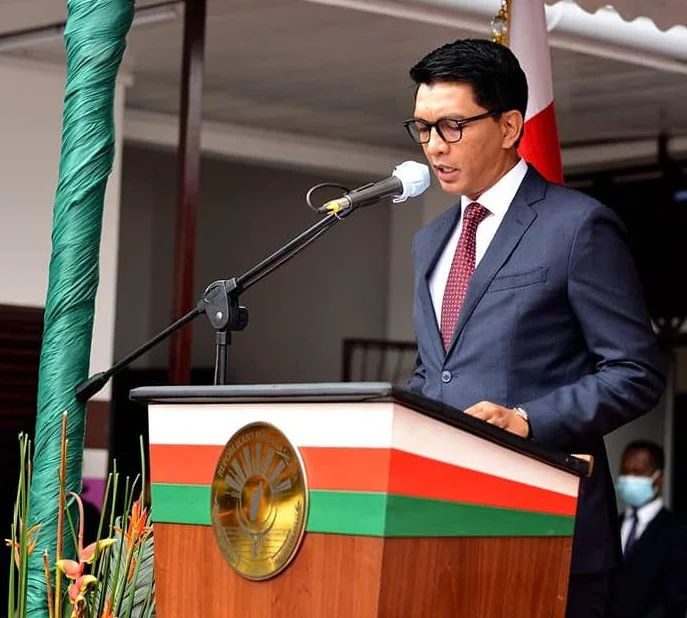
President Andry in February of 2021, giving a speech during an event hosted by the Embassy of India to the Republic of Madagascar and the Union of the Comoros.
Photo Credit: India in Madagascar and Comoros
Madagascar is defined by its natural beauty; its white sands, clear waters and surreal forests attract hundreds of thousands of foreign tourists every year. This influx of visitors makes up a significant portion of the country’s economy. In 2024, tourism was responsible for around 15% of Madagascar’s gross domestic product (GDP). With this dependence on foreign visitors, Madagascar’s leaders have emphasized the development of tourist attractions rather than investing in the well-being of the country and its people.
Tourists regularly visit the coastal towns, national parks and protected forests of Madagascar. These areas are thus heavily developed to meet the needs of foreigners. For instance, the inhabitants of Andasibe and Falierana, towns located near tourist-hub Andasibe-Mantadia National Park, have access to electricity and water. On the other hand, the rural town of Ampangalantsara, located about three kilometers from Andasibe, is not frequented by tourists. Consequently, the government has not supported infrastructure development in this area, as the village has no electricity or drinking water.
The same pattern can be seen for most cities in Madagascar. The majority of the water cuts and power shortages the Malagasy people experienced prior to the 2025 protests were concentrated in Antananarivo and other urban areas in the country. These cities are geographically distant from the tourist attractions and are typically not visited. For the government, development is not a priority in these locations, resulting in population growth that far exceeds the rate of infrastructure expansion. As a result, around 60% of urban inhabitants live without access to these basic necessities.
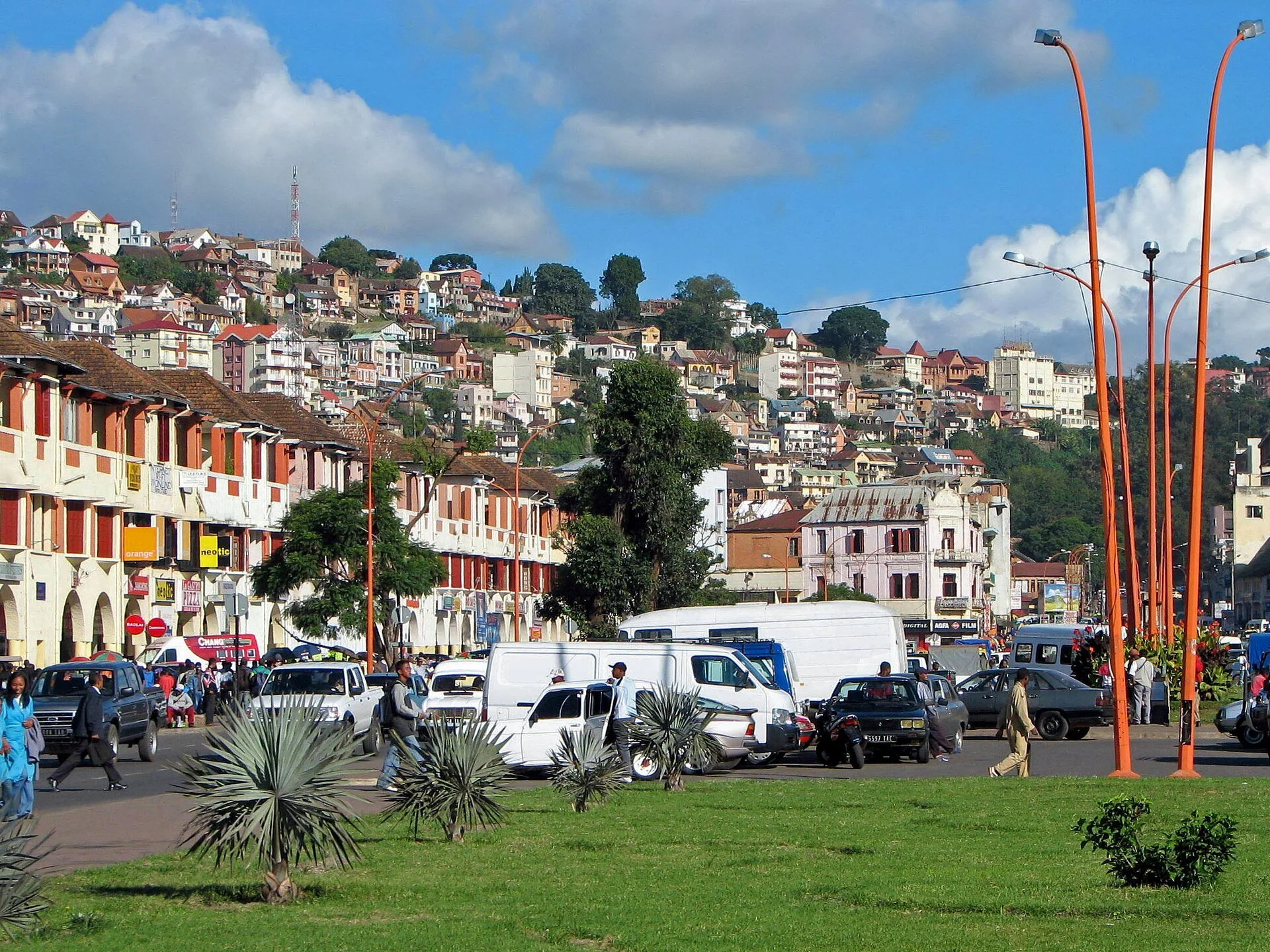


Independence Avenue in Madagascar’s capital, Antananarivo. Antananarivo, one of the less developed areas of Madagascar, served as the center of the protests.
Photo Credit: Bernard Gagnon

When comparing the educational resources available for inhabitants of tourist destinations to less-visited locations, it becomes apparent that Madagascar’s education sector contains more glaring inequalities. Ampangalantsara, a rarely-traversed rural town, possesses no schools. The village’s children and teens are forced to walk three kilometers to the nearest schools, which are not government-funded, but operated by nonprofit organizations. As a result of these difficulties, many local children do not pursue academics.
In contrast, Andasibe benefits from public, government-funded primary schools and high schools, as well as private institutions. Its inhabitants have much higher rates of education than those in urban areas, such as Antananarivo, and quieter areas, such as Ampangalantsara. For instance, a 2022 study assessing Malagasy education levels assigned Andasibe a score of 17 for secondary education and 4 for tertiary education, while Ampangalantsara received a 4 for secondary education and 0 for tertiary.
The educational gap can be partially explained by the government’s prioritization of cultivating human capital in tourist towns and villages. Educated and skilled workers are required for the daily functioning of hotels, restaurants, natural sites and historical monuments that must accommodate the needs of foreigners unfamiliar with the language and culture of Madagascar. Thus, the Malagasy government invests more into locals’ education in tourist towns.
Since hospitality work requires a high academic skill set, the workers are generally paid more than those working in sectors requiring less education, such as agriculture, a sector that makes up around 70% of Madagascar’s workforce. While the average Malagasy person makes about 193,000 ariaries ($43) a month, a hotel worker can earn about 300,000 ariaries ($60) a month.
These disparities are shockingly apparent to many Malagasy who notice differences in educational resources, availability of basic necessities and potential for higher income between tourist and non-tourist areas. This widespread inequality is one of the reasons why many locals protested, expressing frustration with the governing system’s focus on foreigners rather than citizens.
Despite higher wages, better opportunities and improved resources, many Malagasy people that live and work in tourist areas do not feel the benefits. In fact, 22-year-old hotel worker Adrianarivony Fanomegantsoa felt urged to join the protests because his 300,000-ariary ($60) monthly salary was not enough to pay for his groceries.
Fanomegantsoa’s complaint is echoed in tourist destinations around the world. As demand is high in tourist areas, there is usually not enough supply to satisfy the needs of locals. Therefore, the price of goods and services in tourist destinations are generally higher compared to other areas, forcing locals to pay more for necessities and spread out their income to survive.
Despite tourism's positive impact on Madagascar's economy, the government’s prioritization of this industry favors foreigners over locals. The creation of new jobs and a boost to the country's GDP do not make up for the social divide and economic inequality affecting the local communities of Madagascar. These clear and evident disparities are what caused the Malagasy people to fight for a changed nation, but it is more than likely that these developmental differences will persist with the growth of tourism.