Nigeria’s Many Wars, America’s Single Story: Whose Pain Counts?
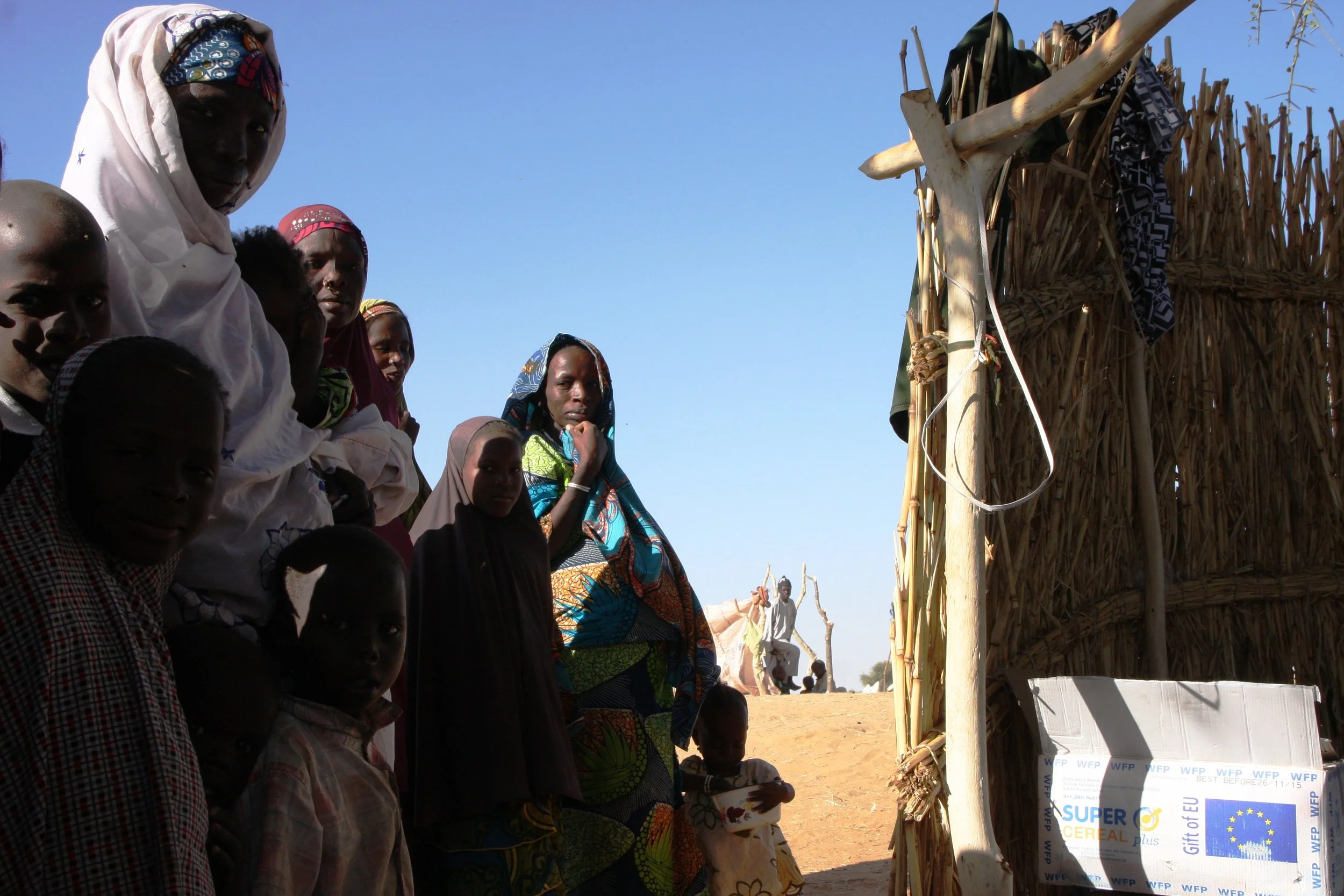
Nigerian refugees fled to Niger after Boko Haram attacked the town of Damassak in 2014, an early example of the mass displacement that continues across the region due to Boko Haram.
Photo Credit: EU Civil Protection and Humanitarian Aid
Nigeria has long confronted periods of ethno-religious conflict, but recent attacks on Christian communities have drawn unusual scrutiny in the United States (U.S.). President Donald Trump accused “radical Islamists” of committing “mass slaughter” against Christians. Television host and comedian Bill Maher labeled the conflict a “genocide.” The U.S. has since launched missile strikes in northwest Nigeria in the name of defending Christians. Yet, this framing oversimplifies a far more complex crisis, one rooted not only in religion but also in politics, economics and local grievances that cut across faith lines.
Inside Nigeria’s Many Wars
Nigeria is often described as roughly evenly split between Muslims and Christians, with Muslims dominating the north and Christians concentrated in the south and parts of the Middle Belt of the country. While jihadist groups, bandits and communal militias have indeed targeted churches and Christian communities, these same actors have destroyed Muslim villages and mosques, devastating mixed rural communities and leaving civilians of all faiths vulnerable.
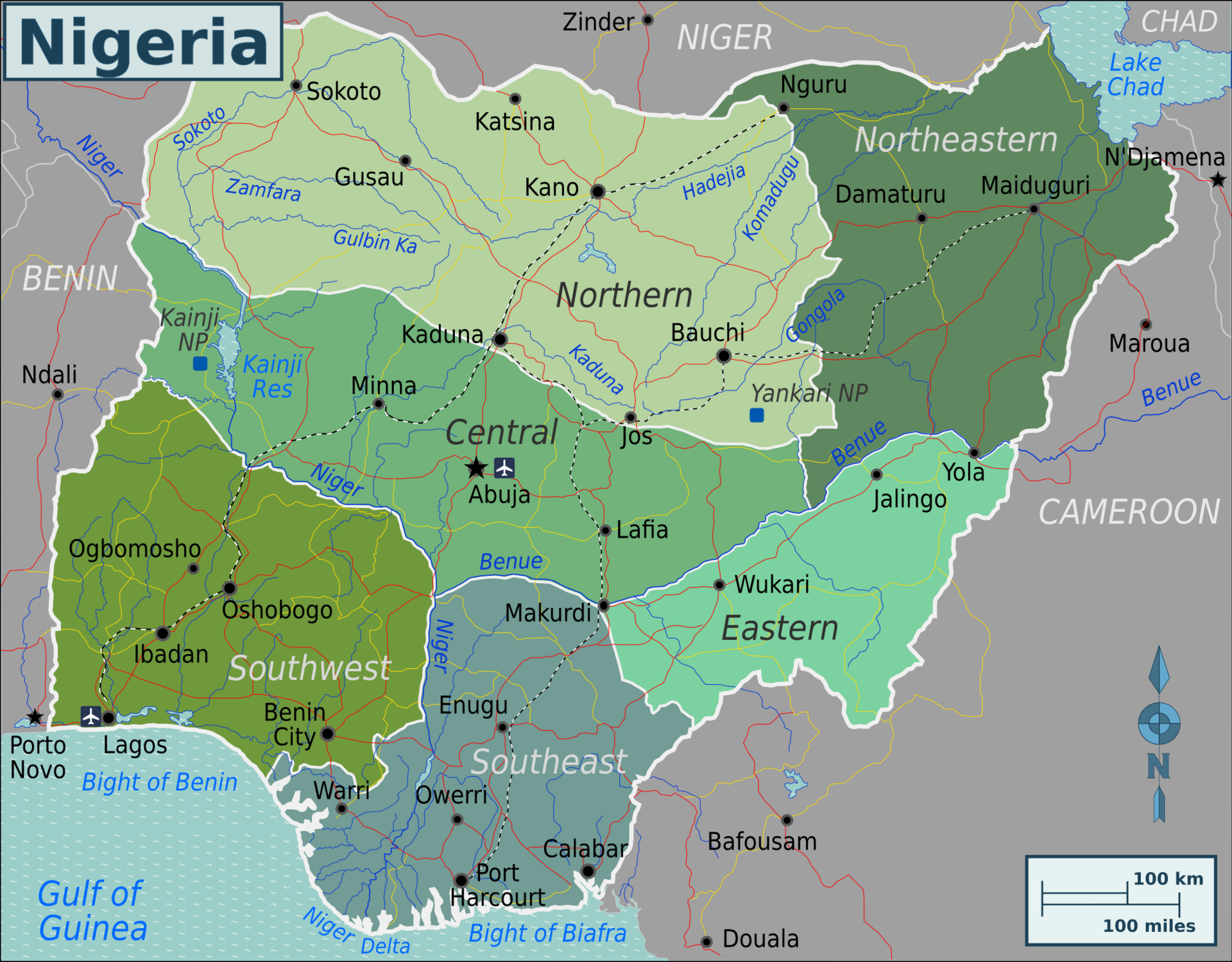
Map of Nigeria highlighting the north (Boko Haram and criminal banditry epicenter), the Middle Belt (central and eastern region), and the south (separatist activity).
Photo Credit: Burmesedays
Boko Haram, Nigeria’s most infamous jihadist group, has dominated international headlines for well over a decade. Emerging in the early 2000s as an Islamist reform movement in northeastern Nigeria, it evolved into a violent insurgency after the death of its founder, Mohammed Yusuf, in 2009. The group’s campaign to abolish the Nigerian state and impose a theocracy has targeted both Christians and Muslims, killing an estimated 350,000 people between 2009 and 2021. Its splinter faction, the Islamic State in West Africa Province (ISWAP), emerged in 2016 after accusing Boko Haram of violating Islamic doctrine by killing Muslims. ISWAP focuses on state and military targets, though the two groups continue a brutal territorial war across the Lake Chad region. Other Boko Haram offshoots, such as Ansaru and Mahmuda, have carried out limited but targeted violence in other regions.
Despite many military campaigns, the Nigerian government has struggled to contain these groups. The creation of the Lake Chad Basin Multinational Joint Task Force (MNJTF) marked a significant regional effort to curb Boko Haram’s spread. Yet, coordination challenges, financial constraints and Boko Haram's evolving tactics continue to undermine progress.
Violence is not limited to jihadist insurgencies. The north and central regions of Nigeria face challenges from “bandits,” a local term for criminal gangs who typically kidnap for ransom. Bandits, largely composed of members of the Fulani ethnic group, traditionally made a living through raising livestock. In the current political climate, kidnapping has become an ideal method to make quick money rather than traveling to feed their livestock. In recent weeks, the Nigerian government has approved the deployment of more troops and police to areas of concern, but bandit attacks persist.
In the Middle Belt, tensions between Fulani Muslim herders and Christian farming communities have become another major source of conflict. Herders traditionally travel to this fertile region in search of pasture, but urbanization has forced herders to take alternative routes. Farmers have accused herders of trampling over crops, often prompting armed Fulani herders to launch retaliatory attacks on farming villages, fueling the rise of ethnic militias. The government’s typical response to such division is to deploy the police or the military after clashes. In some cases, local leaders, state leaders and law enforcement have been criticized for taking sides. Although a law has been put in place to prohibit grazing on established ranches, enforcement has been weak, and local leaders often respond only after violence erupts.
Meanwhile, separatist movements have added another layer of instability by straining state resources and placing additional political pressure on the Nigerian government. Separatism in Nigeria traces back to the colonial era. British rule struggled to balance power among different ethnic groups, an effort the Nigerian government continues to confront. For instance, the southeast region faces a separatist movement led by the Indigenous People of Biafra (IPOB). Their leader, Nnamdi Kanu, launched a radio show that has broadcasted separatist messages since 2009, and their group was deemed a terrorist organization in 2017 by the Nigerian government, with Kanu forming an armed group three years later. In the southwest, Yoruba activist Sunday Igboho has also championed calls for a separate Yoruba nation, echoing widespread frustrations over insecurity and political marginalization.
Washington’s Response to Nigeria
While Nigeria confronts a complex series of conflicts, the U.S. government has zeroed in on one particular dimension of the crisis: religious persecution against Christians. On October 31, the Trump administration designated Nigeria as a Country of Particular Concern (CPC), a label given to countries that have violated religious freedoms. The designation comes after months of lobbying, with Senator Ted Cruz sponsoring a bill to add Nigeria to the CPC list and impose sanctions on the nation. Cruz alleged in a post on X that “Officials in Nigeria are ignoring and even facilitating the mass murder of Christians by Islamist jihadists.” In response, Deputy Speaker of Nigeria’s House of Representatives Benjamin Kalu maintained the proposed legislation was “based on incomplete and de-contextualized assessments” and the designation was “unjustified” and “potentially damaging.”
Much of the debate over the CPC designation is based on data from a 2023 report by the International Society for Civil Liberties and Rule of Law (InterSociety). In an updated report, InterSociety claimed that between January and August of 2025, 7,000 Christians were killed, a statistic that has spread across social media in the U.S. According to a fact-check from BBC, InterSociety used a list of media reports to measure the number of deaths, but about half the cases did not mention the religious identity of victims. The Nigerian military also accused the organization of being linked to IPOB separatists and its predominantly Christian base. Another separatist group, the Biafra Republic Government in Exile (BRGIE), openly claimed they had hired American lobbying firms and met with U.S. officials to promote the narrative of a Christian persecution.
Despite concern from Nigerian officials, Trump threatened in early November that if Nigeria did not take action to stop violence against Christians, the U.S. would stop providing all aid and “may very well go into that now disgraced country, ‘guns-a-blazing,’ to completely wipe out the Islamic Terrorists who are committing these horrible atrocities.” He added, “If we attack, it will be fast, vicious, and sweet, just like the terrorist thugs attack our CHERISHED Christians!”
Nigeria has rebuked these statements. President Bola Ahmed Tinubu posted that “Nigeria stands firmly as a democracy governed by constitutional guarantees of religious liberty.” Though many Nigerians have welcomed the global attention on countering Boko Haram, there are concerns that the Trump administration's message ignores the real sources of instability in Nigeria.
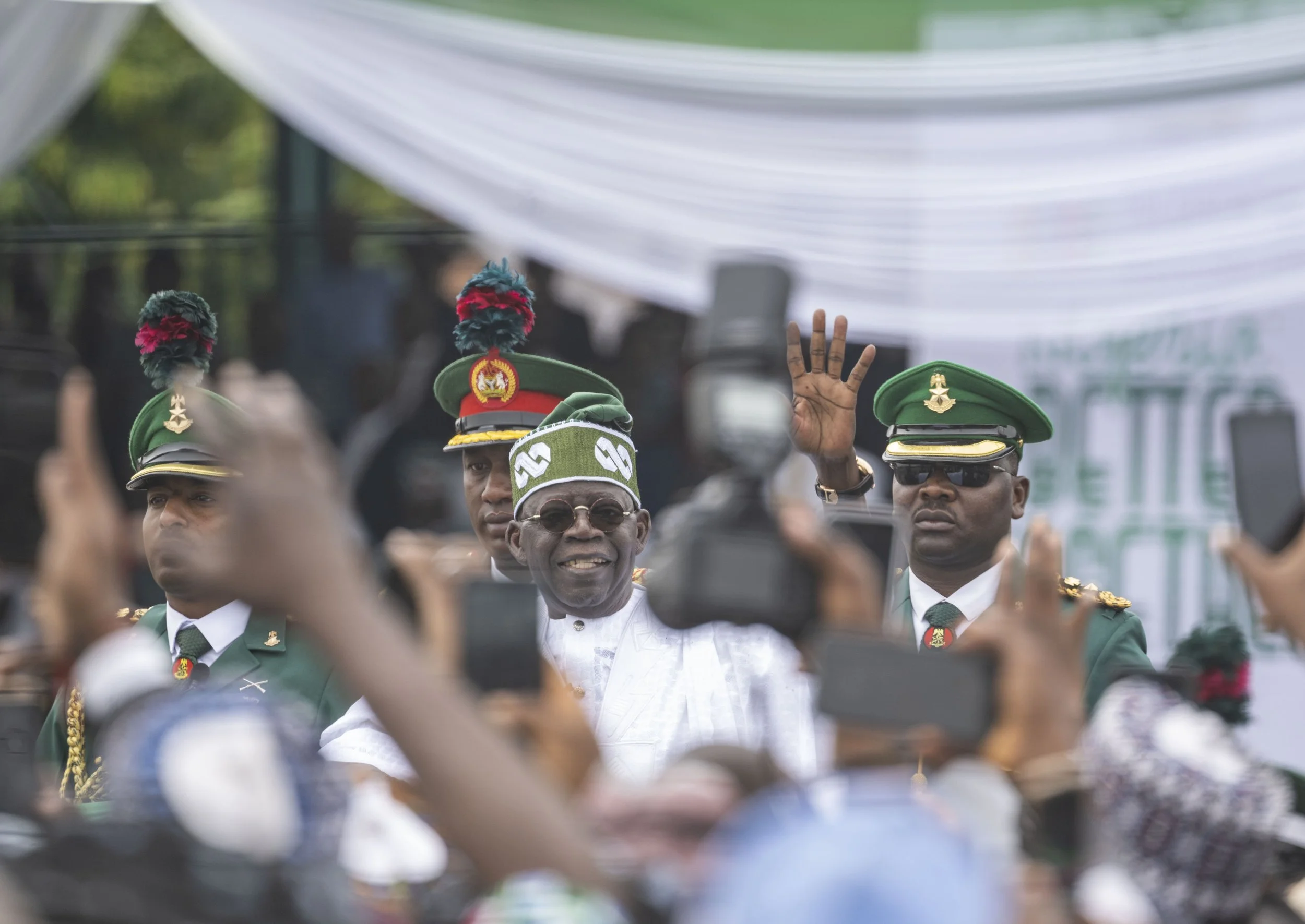

President Bola Ahmed Tinubu at his swearing-in ceremony in 2023, later defending Nigeria’s democracy amid U.S. concerns.
Photo credit: Paul Kagame
On Christmas Day 2025, Trump followed through with his threats by ordering a series of missile strikes that hit two ISIS camps in northwest Nigeria, calling it a “Christmas present.” Trump later announced on social media that the U.S. had launched a strike against “ISIS Terrorist Scums” who had been targeting “innocent Christians at levels not seen for many years.” Nigeria’s Foreign Minister Yusuf Maitama Tuggar articulated that this was a “joint operation,” with Nigeria providing intelligence support, but emphasized it had “nothing to do with a particular religion.”
Nigerian officials argue that both the CPC designation and religious framing of the U.S. strike oversimplifies the country’s complex conflicts. Despite this, ongoing restrictions under blasphemy laws do raise legitimate concerns about Nigeria’s commitment to protecting freedom of religion. Under Nigerian blasphemy laws, it is a crime to “insult” any religion, with a penalty of up to two years in prison. Twelve northern states that have adopted Sharia law impose even harsher punishments for blasphemy, including the death penalty for insults against Islam.
These laws make it difficult to separate criticism from an “insult,” as individuals are allowed to define an “insult” as they please. In many cases, individuals take matters into their own hands and are incentivized to commit extrajudicial killings, leading to various mob attacks against those who “insult” Islam in northern Nigeria.
Justice for Who?
Though religion plays an important role, Nigeria’s insecurity cannot be reduced to a conflict of religious persecution against Christians. The crisis is rooted in deeper political, economic and social challenges that affect citizens across the country. Simplifying the conflict into a story of faith-based persecution overlooks the broader factors driving instability, from weak governance to competition over land and resources. As Deputy Speaker Kalu explained, “Nigeria’s insecurity is complex, multi-casual, driven by insurgency, criminal banditry, farmer–herder conflicts, separatist agitations and communal disputes that affect citizens of all faiths.” Any lasting response must confront the complexity of this conflict, addressing issues to strengthen institutions, promote inclusion and bring stability to Nigeria.
Recent American political discourse raises a deeper question: whose pain counts? By spotlighting Christian victims while largely sidelining Muslim and other communities, the Trump administration and sympathetic media figures shape a narrative in which some lives are grievable and others remain politically invisible. This selective focus distorts the reality of violence in Nigeria and narrows the space for policies to address the suffering of all Nigerians.