Influencers for Israel: How State use of Social Media reveals the Struggle to Win the Narrative
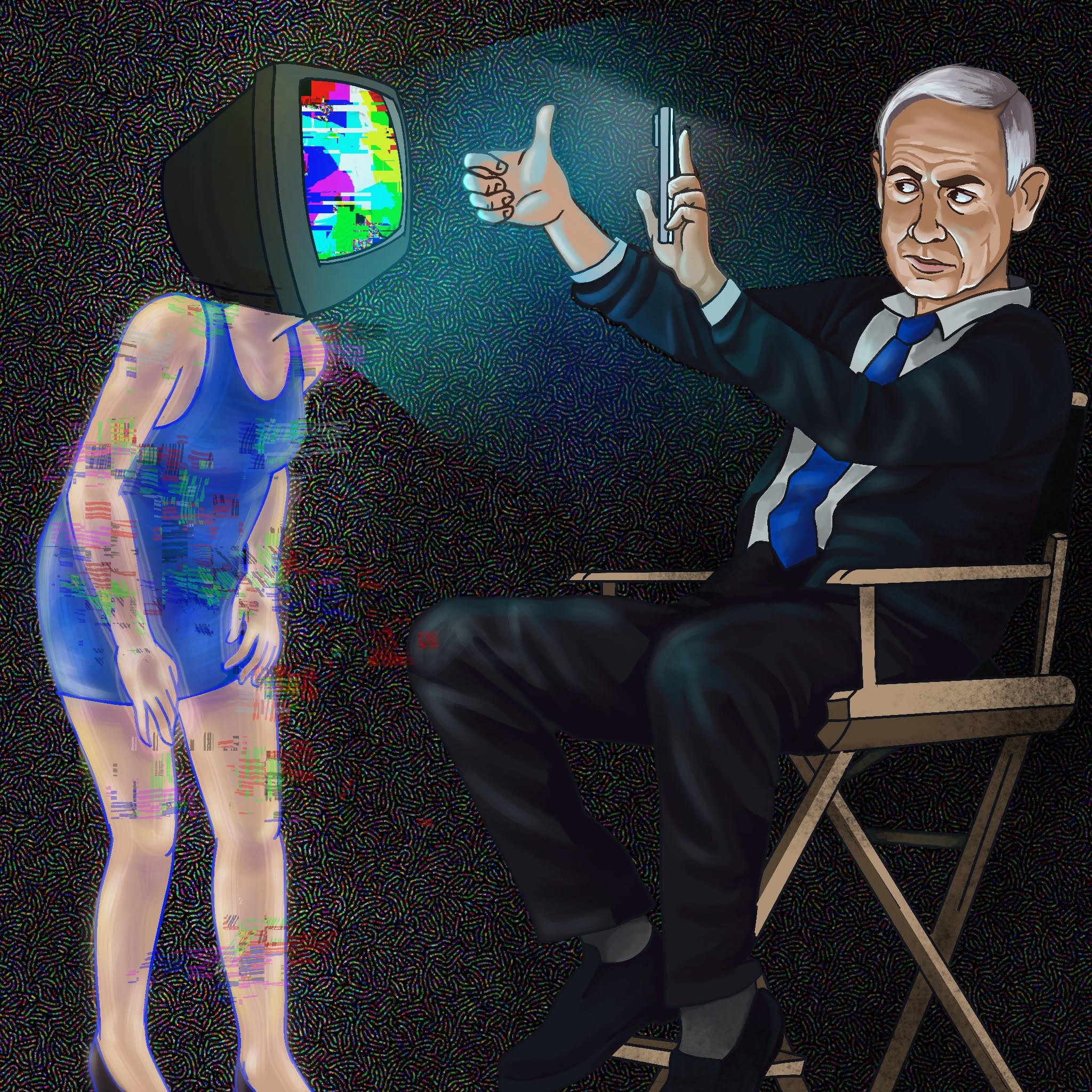
Art by Illustrator Aava Ghorbanian
Nearly two years after the October 7 attacks launched the latest war in Gaza, Israel’s Prime Minister Benjamin Netanyahu visited New York. During his stay, he met with United States (U.S.) President Donald Trump to discuss a peace plan for Gaza. He spoke at the UN General Assembly Meeting. He also held a meeting to stress the importance of public diplomacy. However, the attendees weren’t key politicians or civil servants; they were U.S.-based social media influencers.
Invitees included content creators like Debra Lea, a conservative influencer with over 100,000 followers on Instagram and X, who frequently appears on Fox News and right-leaning podcasts. Another attendee was Miriam Ezagui, who has garnered over 2.3 million TikTok followers by sharing day-in-the-life content as an Orthodox nurse. But Netanyahu isn’t just meeting with pro-Israel influencers. Government documents reveal that Israel’s Ministry of Foreign Affairs is using intermediary groups to contract influencers. Are Israel’s actions revolutionary? Or are they merely the next logical step to warfare in the digital age?
Digital propaganda is by no means new, not even on social media. Russia has been caught using internet bots to share complementary content. Additionally, efforts to ban TikTok stemmed from concerns that the algorithm pushed pro-Chinese Communist Party posts to users. This outrage eventually produced U.S. legislation prohibiting distributing, maintaining, or providing internet hosting services for a foreign adversary controlled application.
On their verified accounts, countries and their affiliate departments often upload content that boosts their image and agenda. However, Israel isn’t only utilizing bots and official domestic accounts to push its narrative; the nation is working directly with U.S.-based influencers to sway public opinion.
The Quincy Institute for Responsible Statecraft estimated that the contracted influencers received $7,000 per pro-Israel social media post. The institute generated these projections by utilizing financial information declared on the Foreign Agents Registration Act (FARA). The FARA requires actors engaged in advocacy work on the behalf of foreign governments to register and disclose their relationship, activities, receipts, and disbursements. Some sources have questioned the legitimacy of the $7,000 estimate, as the report merely approximated from the declared $900,000 total, which includes both production and influencer stipends. Whatever the sum may be, it is undeniable that content creators are getting paid for their pro-Israel posts.
The FARA was registered by Bridge Partners LLC for the government of Israel through Havas Media Group Germany. Its parent company, Havas Media Group, is a global agency committed to driving brand growth by leveraging digital media. Havas Media Group Germany boasts clients such as RedBull, Nintendo and, apparently, the state of Israel. Although claiming the campaign’s goal is to “promote cultural exchange between the United States and Israel,” the use of such an agency suggests that consumers aren’t being sold on a company or a product, but a country.
The campaign begins by selecting influencers and brainstorming concepts. During the development phase, five to six influencers will start producing content as additional creators are onboarded. Around 14-18 content creators will produce 100-120 posts over nearly half a year. The Federal Trade Commission typically requires users working with brands to clearly disclose their paid endorsements. Whether influencers will share that their posts are state-sponsored remains unclear.
Influencers aren’t the only way Israel is leveraging social media. The nation also entered a $1.5 million per month contract for “strategic communications” with Clock Tower X LLC. This firm is run by Bradley Parscale, President Donald Trump’s former digital media advisor and campaign manager. The ultimate goal? Increase impressions and disseminate pro-Israel content broadly. His firm will use AI to conduct search engine optimization reports, which seek to improve the visibility and ranking of relevant narratives, likely those supporting Israel. Each month, the contract promises a minimum of 50 million views and 5,000 posts.
Clock Tower X will track demographic groups and target at least 80% of its content to Gen Z users on Instagram, TikTok, YouTube, podcasts, and other digital outlets. Younger individuals are generally more likely to sympathize with Palestinians rather than Israelis; 33% of Americans ages 18-29 reported their sympathies lie predominantly with Palestinians, which is 17% above the average for all ages. While older generations may be more easily convinced by content on social media, Israel’s influencer sponsorships are likely aimed at obtaining the support of a more media savvy generation that is less susceptible to overt political manipulation.
These efforts likely constitute part of the $150 million budget for public diplomacy obtained by Israel’s Foreign Affairs Minister Gideon Sa’ar in December 2024. This sum is 20 times past allotments. Israel’s choice to vest such a vast amount into diplomacy, rather than toward the battlefield, may seem questionable. However, the country’s strategy reflects how shaping the narrative is crucial in today’s global conflicts.
Win the story, win the war?
While military success has historically been the ultimate goal during wartime, it’s now only part of the battle. States must also control the narrative. Netanyahu himself stressed the importance of winning public opinion during his meeting with U.S. influencers. Surrounded by unfriendly neighbors and targeted by terrorist organizations seeking its destruction, the nation is dependent on international support for its survival.
Western countries have a record of supporting Israel, but public approval has been on the decline. The European Commission, the EU’s executive body, has proposed trade limitations against Israel, potentially eliminating the nation’s preferential access to the market. Numerous countries have also suspended or restricted weapons exports to Israel. These responses complicate Israel’s ability to conduct military operations, which poses a threat to its national security.
Although Israel is likely concerned about its declining global position, what remains tantamount is its long-standing alliance with the U.S. The nation is the largest cumulative recipient of U.S. foreign assistance since World War II, receiving an annual allotment of $3.3 billion in Foreign Military Financing (FMF) funds. Because the U.S. provides 66% of Israel’s arms, international restrictions have had a somewhat minimal impact. However, many Democrats and Republicans are pushing back on the wisdom of the alliance. As the conflict has drawn on, support for Israel among the general American public has also been gradually waning. Thus, improving the opinions of those in the U.S. is more important than ever; Israel doesn’t want to risk further public or political pushback that could jeopardize funding or support.
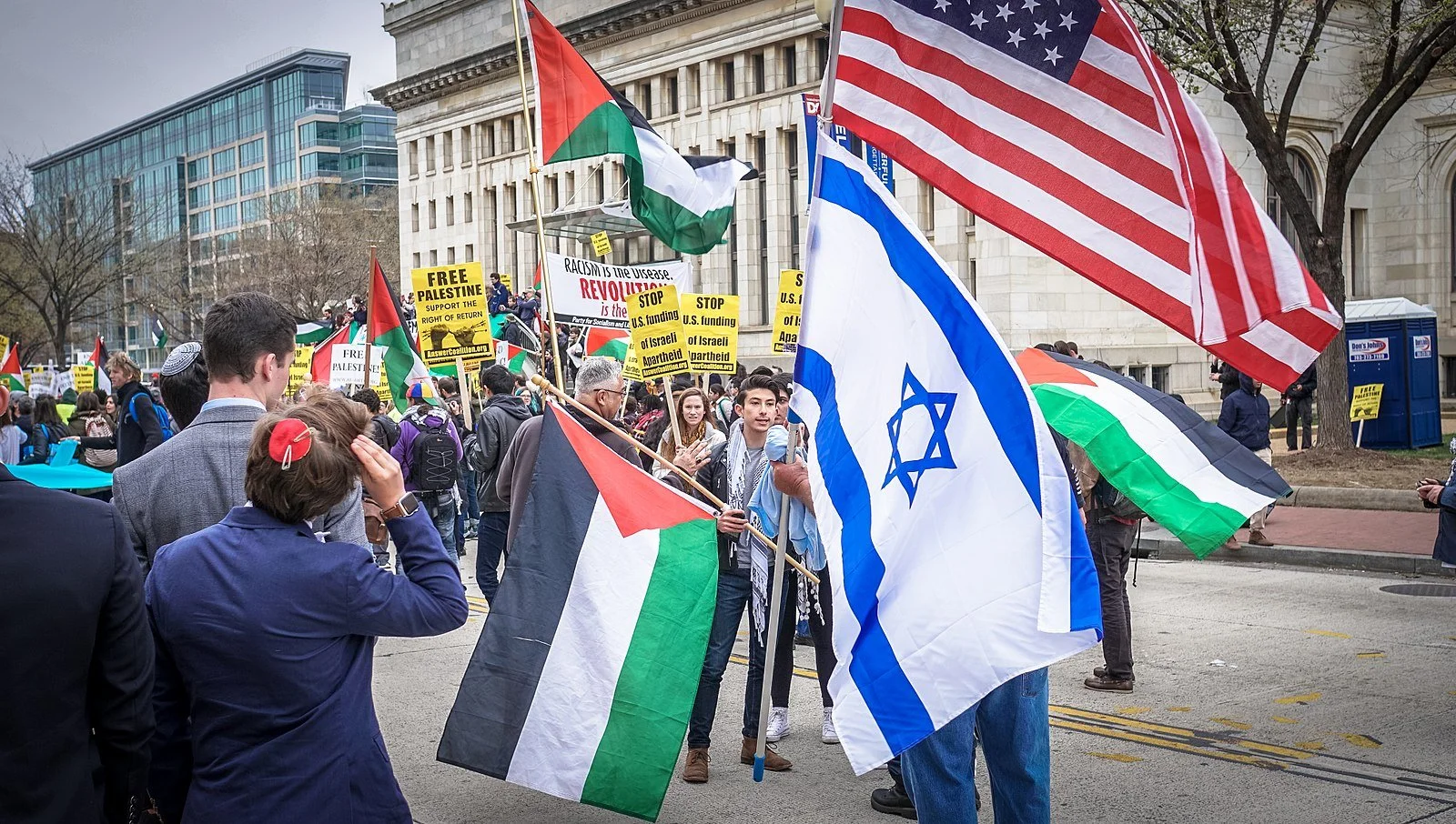
Protestors in favor of Israel clash at a pro-Palestine demonstration in Washington D.C. in 2017. The region has been a point of constant contention, but protests have especially ramped up after the most recent war began in 2023.
Photo Credit: Ted Etyan

Social media has been at the forefront of this war, raising awareness about the conflict. Users have opened a lens into the front lines, sharing their struggles to find food or avoid airstrikes. Social media has also gained increasing importance given Israeli restrictions preventing foreign journalists from accessing Gaza. Many have thus come to rely on posts from Gaza for information.
While the platforms have provided a ground-level perspective on otherwise inaccessible regions, they certainly aren’t perfect. The war has also been rife with misinformation. Photos and videos predating the October 7 conflict are circulating on social media to mislead audiences. Pro-Israel think tanks contend social media is a key battleground because pro-Hamas sources can use the platform to spread information that delegitimizes Israel and glorifies terrorism. However, those supporting Palestine maintain that Israel is intentionally cutting power in the region, restricting social media access because posts reveal the nation’s true colors. Regardless of one’s view, it’s clear that social media remains central to the conflict.
Democratic Differences?
Israel is not the only country to exert influence through atypical mediums. Al-Jazeera, a news outlet especially popular for its coverage of the Middle East, is partially funded by the Qatari government. Although Al-Jazeera claims its coverage is independent, many believe the outlet should register as a foreign agent. Further, Israel does not have the most actors registered under the FARA in its region; the nation has the fourth-most, behind Qatar, the United Arab Emirates, and Iraq. Thus, these countries may have more registrants working to boost their perception.
Some may argue these statistics suggest that other Middle Eastern nations, not Israel, should be under scrutiny for attempting to influence U.S. audiences. However, justifications for the U.S.-Israel alliance are rooted in the idea that Israel is a beacon of democracy in the region. Israel is the only nation in the Middle East deemed “free” by Freedom House — an organization that reports on the political rights and civil liberties enjoyed by citizens in a nation. While Israel may argue its digital manipulation is necessary given the international context, it’s not the behavior expected from a so-called democracy, especially one considered the stand-out exception in a region of autocracies.
Undeniably, the media landscape is changing, as reflected by the newfound role influencers are playing. Social media has amplified voices that have typically been silenced or sidelined. However, these platforms have also become breeding grounds for propaganda and misinformation, spread by democracies and autocracies alike. Whether narratives are disseminated through bots, official accounts, or content creators, it’s clear that social media has become one of many tools a nation has at its disposal during wartime. As countries seek victories on the screen to secure support for the battlefield, Israel’s influencer initiative may become the new norm.