Waste Banks Offer a Promising Initial Solution to Indonesia’s Waste Mismanagement
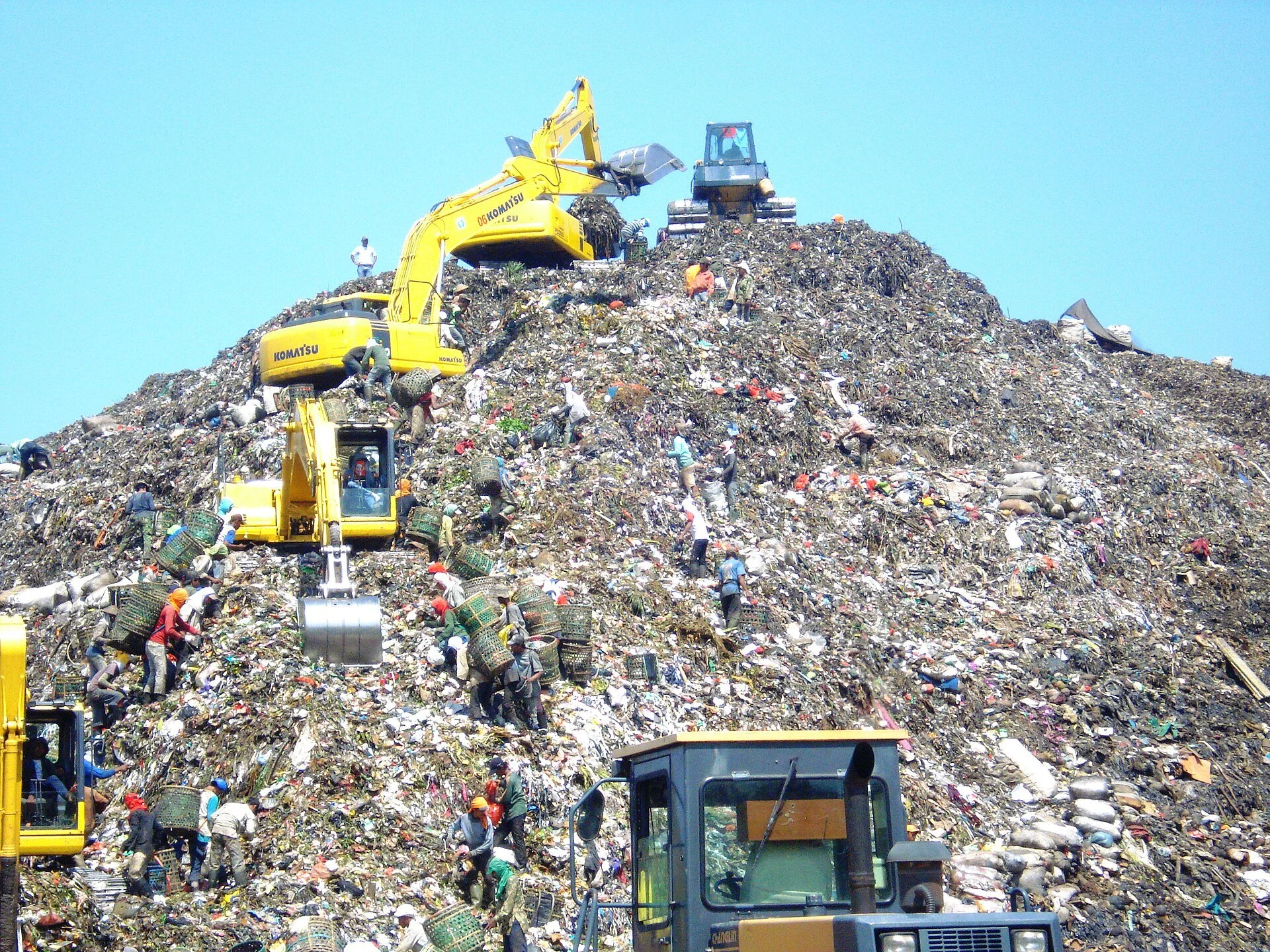
Photo credit: Garbage piles up at the Bantar Gebang landfill in Bekasi City, Indonesia. This landfill is the largest in Indonesia, receiving over 7,000 tons of waste a day from neighboring city Jakarta.
Photo credits: 22Kartika

Indonesia is one of the most vulnerable countries to climate change and is home to Jakarta — the most populous and at-risk metropolitan area in the world. Critical waste mismanagement is one of the nation’s most pressing challenges. Waste mismanagement has a dual effect, interrelated but separate: it is well-known that waste pollutes the environment, but it also perpetuates poverty and social issues through an informal economy of waste picking.
Indonesia has a large informal economy that makes up about 59% of its workforce. With an informal economy of this size, it is difficult to maintain minimum wage, workplace protections and ensure benefits for a wide section of the population. Statistics Indonesia estimates that 53% of workers do not make their provincial minimum wage — an issue that flared during 2025 protests as legislators approved for themselves a housing allowance of 700 million rupiah, over 10 times Jakarta’s minimum wage. Despite the minimum wage in most other provinces being half of Jakarta’s 5.7 million rupiah ($339 USD) per month, the widespread failure to meet even these relatively low wage standards because of the concentration of the workforce in the informal economy reflects a serious need for employment reform.
Among the informal economy, waste pickers, or pemulung as they are known locally, manually sift through landfills and waste imports for recyclable plastics to sell. According to the International Alliance for Waste Pickers, Indonesia has an estimated two million of these workers, who earn anywhere between 36,000-52,000 rp a day ($1.83-$3 USD). The lower range of this amount meets the UN definition of poverty, living at $2 a day. Additionally, waste pickers often settle near landfills in highly vulnerable settlements. These settlements are sometimes on informally rented state land, with little access to state infrastructure, like schools or free clinics, or are temporarily rented rooms from recycling businesses. Indonesia’s monsoon season brings heavy rains, which can cause avalanches that destroy communities and cause deaths. March saw a landslide in the country’s largest dump site, located in a city outside Jakarta. It killed seven people, mostly waste pickers and local food stall owners. Unprotected from the weather and unable to access basic sanitation facilities and clean water, the situation of these workers underscores the human cost of waste mismanagement.
One of the main reasons these workers exist in the first place is that only an average of 10% waste in various regions of Indonesia is officially processed. Most waste is dumped or burned — not even touching municipal waste management systems. The World Economic Forum notes that 48% of total waste across the country is openly burned, and 61% is burned in rural areas. As a result, the first challenge is scaling the government’s waste collection.
Waste banks offer a promising remedy to this issue, serving as both a form of trash collection for rural communities and an incentive for people to separate their trash for better management. The first waste bank was established in Yogyakarta in 2008. It provided payouts to citizens for separating trash and recycling, which would then be weighed and sold to recycling facilities. Tellers itemize the waste given and provide a payment, accessible after several months of recycling. The earnings could be substantial, paying up to half of the cost of some families’ expenses. The success of this initial bank prompted its adoption across the country, often with localized strategies. However, it hasn’t always succeeded. Maintenance is a careful balancing act between ensuring that there isn’t oversupply, mismanagement, inadequate staff training or lack of community buy-in for the initiative. Other studies have shown that waste banks can serve as an important point of waste centralization for rural communities that otherwise have no form of municipal waste management. With little to no starting point, banks offer a financial incentive for participation. And, some successful waste banks have used their profits to offer services traditionally provided by municipal governments in other countries, like the purchasing and operating of waste collection vehicles to make it easier for residents to deposit their trash.
Some of the most effective strategies to reduce waste production undertaken in countries like South Korea and Sweden would be deeply unpopular if implemented in Indonesia. South Korea’s charge for municipal trash bags to discourage trash production and tax on single-use plastic bags wouldn’t be accepted by a population that already distrusts a government led by elite politicians. And, Sweden’s tax on highly polluting industries wouldn’t be advantageous to Indonesia’s raw materials-based export economy — one led by palm oil, nickel and coal. Nickel mining, for example, has polluted the water of communities surrounding the mines, caused deforestation in Sulawesi, and relies heavily on coal, making its extraction some of the most carbon-intensive in the world.
Additionally, the pattern of waste accumulation mirrors colonial-era thinking about urban management. Indonesia’s city planning history has long been entrenched in the bifurcation between its “planned” and “unplanned” areas, which followed ethnic boundaries. Areas such as Jakarta’s Old Town reflect the legacies of the modernizing colonial city once dominated and settled by European settlers, with easy access to the city center, sanitation, and public facilities. While Jakarta has prioritized the growth of its business districts and tertiary sectors, it has inadvertently built on top of the same colonial structures that marginalized those on the city’s periphery. The government provides public services (in this case, efficient waste collection) to its economically advantageous districts at the expense of kampungs, informal settlements. Similar to how Dutch city planning was meant to modernize Jakarta for its European inhabitants, Jakarta’s growth as a regional capital city and the government’s efforts to attract investment have benefited some, while excluding others. Exporting waste to the out-of-sight peripheries does not erase its social and public health effects, further emphasizing the importance of community-based management efforts to fill the gap left by the lack of central waste directives.
Instead, waste pickers can be integrated into the formal economy by joining government-sponsored recycling networks as operators. Initiatives like the Association of Southeast Asian Nations’ Blue Innovation Challenge, which galvanize environmental development projects, can lead to promising results that combine vocational training and scalable management technology. Duitin, the winner of the challenge, is a digital waste management start-up that turns recycling into data. By recruiting waste pickers into their workforce, they equip local workers to assist in logistical operations using their software. Because one of the waste banks’ main challenges is their reliance on paper systems and poor managerial training for staff, the results of this initiative are promising for mitigating these issues. By March 2025, Duitin had recorded 33.58 tons of recyclable waste and nearly 1,000 waste-deposit transactions through its work with waste banks across Java.
While waste is a global problem that requires international solutions, especially regarding ”waste colonialism,” or the export of waste from developed to developing countries, strengthening domestic waste management is an important first step in mitigating the human and environmental costs of plastic consumption. Optimistic strides in community waste banks in Indonesia offer a promising road to building an inclusive and comprehensive circular economy, but lack a centralized government mandate to scale the system throughout all provinces. Instead, waste management is stratified between NGOs, private companies, regency governments and communities, amplifying logistical issues in ensuring continuous profitability and operational efficiency. A centralized and complete legislative framework to guide the future expansion of the waste bank system would be a useful next step. Regardless, the growth of waste banks in communities across Indonesia is critical for ensuring that the country can continue to grow and thrive in the future.