Uganda’s ‘Gen-Z’ Moment?: Transnational Resistance Movements in East Africa and the Regimes Working Against Them
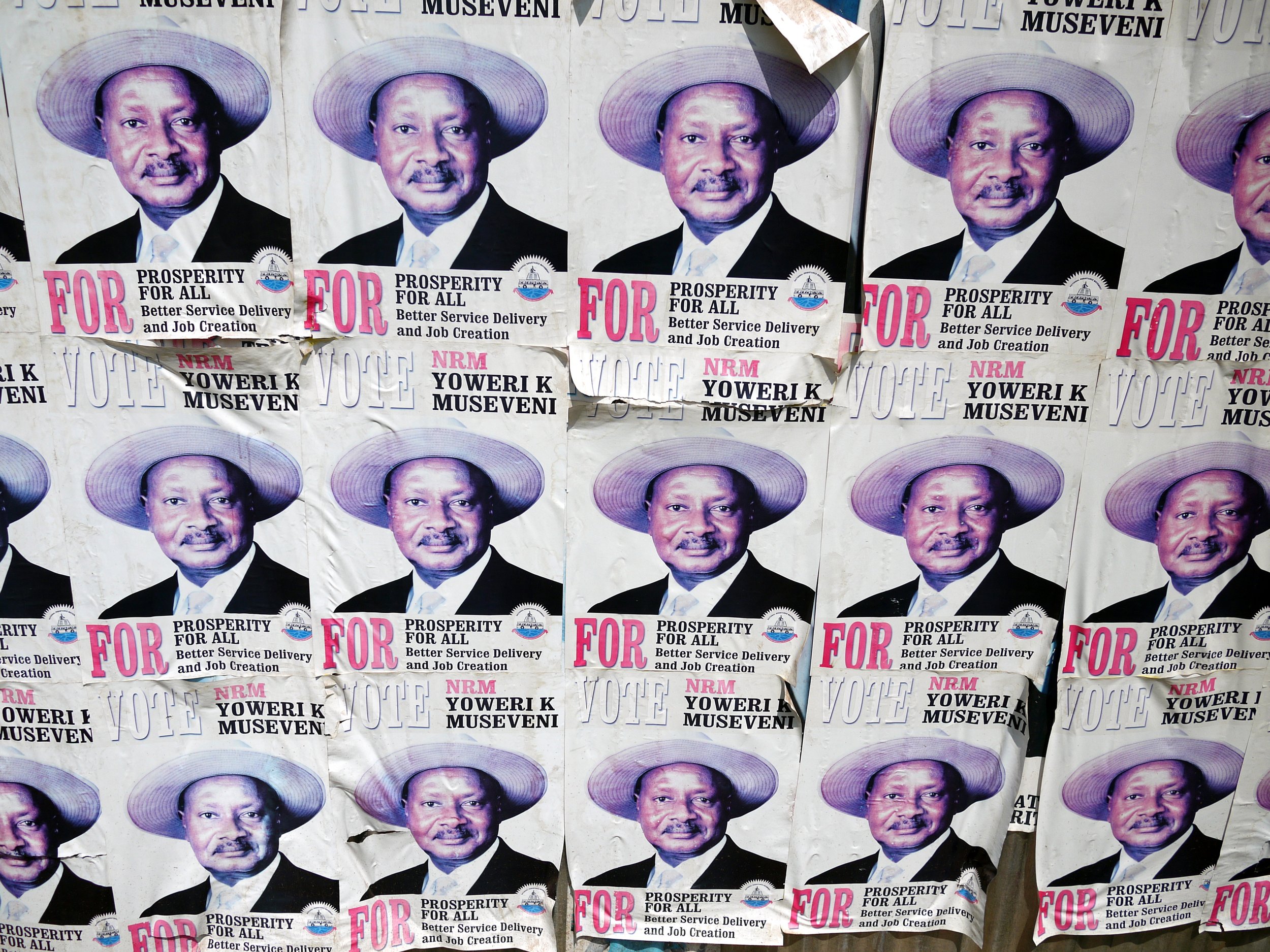
Posters depicting President Museveni in his trademark hat – a symbol associated with farming in Uganda – fill the streets of Kampala in the run up to the vote. Since his redrafting of the constitution twenty years ago, successive elections have been mired with accusations of fraud, ballot stuffing and voter intimidation.
Photo Credit: Gabriel White
On January 15, Ugandans will return to the polls to elect their president for the next five years. The two main contenders are the incumbent Yoweri Museveni, who has become increasingly autocratic since he seized power in 1986, and Bobi Wine, an ex-pop star turned Member of Parliament. Wine ran against Museveni five years ago and challenged the election results as fraudulent.
Museveni and his party, the National Resistance Movement (NRM), have seen off contenders to the presidency six times since he reinstated elections in 1996. However, after he altered the nation’s constitution to allow him to serve beyond his tenure in 2005, international observers have noted increasingly aggressive tactics of voter intimidation and fraud. Yet, supporters of the regime argue its successes outweigh such detractions.
The President's manifesto cites peace as the number one aim of the regime and hails his success in overseeing the longest period of civil stability in Uganda’s 63 years of independence. However, Wine’s National Unity Platform (NUP) appears to be gaining serious traction in the lead up to the vote. His campaign has focused on challenging rampant corruption, opposing the use of a paramilitary force against opposition, and promising jobs to meet a booming youth population.
A taxi-driver from Kampala named Eric, expressed how he felt Uganda had changed since 2021. He told me the “campaigns are totally different … because the people [born since Museveni] are the majority in Uganda now and are yearning for a change… They have gone to school but are still unemployed.” Improved healthcare and education under Museveni has led to significant population growth. However, according to the Uganda Bureau of Statistics, the 18-30 age bracket is disproportionately unemployed and largely confined to the informal sector. Existing polling data shows that it is these urban and youth populations that are the most prominent supporters of Wine’s campaign.
A report by the Advocates Coalition for Development and Environment (ACODE) listed inadequate job investment, lack of employable skills and poor social relationships among young people as key reasons for this trend. These issues have long plagued Uganda's job market. In fact, Eric graduated in 2005 with a degree in Business Studies but, like many in his cohort, he makes a living multitasking in the informal sector. This is because breaking into the professional world requires patronage ties to well positioned elites that he doesn't possess.
The unemployment problem has been worsening, and now the youth vote will be crucial in the upcoming election. While Museveni’s campaign has made substantial promises for further job creation to court the youth vote, his words have lost much of their credibility over four decades due to slow and mismanaged follow through. The popularity of the radical NUP manifesto – promising 10 million new jobs in six years and sweeping anti corruption initiatives – implies many want to see more than just plans for infrastructure and investment.
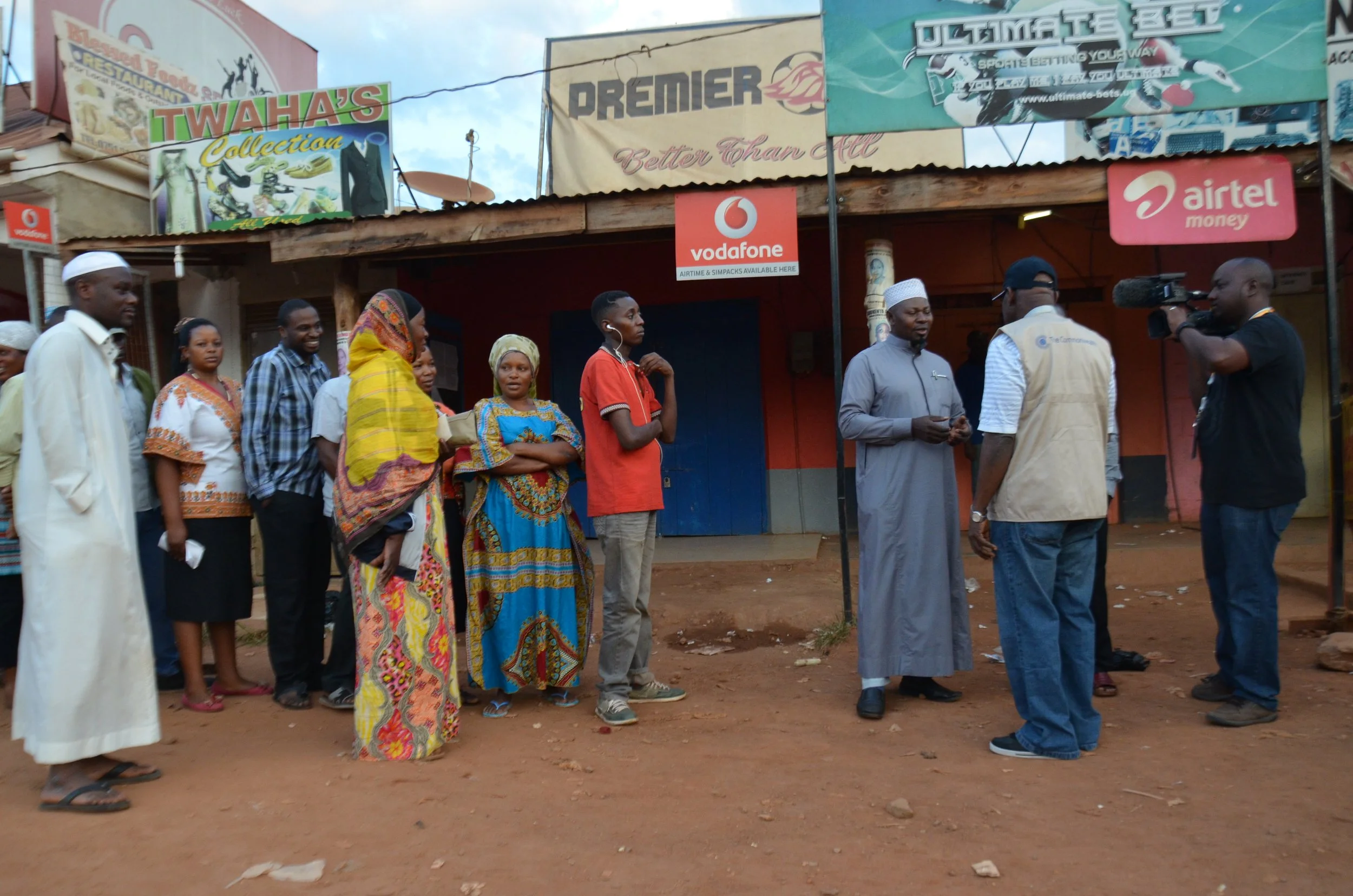
Ugandans are interviewed by Commonwealth observers while they wait in line to vote at the previous election. Bobi Wine has called on his voters to remain at ballot stations to ensure transparency as counting is conducted. However the military have repeatedly proclaimed that citizens must “go home” after casting their vote.
Photo Credit: Commonwealth Secretariat
Eric went on to tell me “it's only Bobi Wine that has the support of the masses … without any bribe. [People will] give money, vehicles, and act as security wherever he has to go.” Eric mentioned that a report from a local administrative officer has gone viral on social media, showing the Museveni regime pulling students out of school to bolster rally numbers.
Furthermore, opposition leaders decree that the President’s Special Forces Command (SFC) – an elite paramilitary force overseen by Museveni’s son, Muhoozi Kainerugaba – is being used to kidnap Wine’s supporters and prevent a fair campaign. Earlier this year, Kainerugaba mockingly announced that his men were holding one of Wine’s bodyguards “in [his] basement” after he had been missing for weeks. The SFC has been repeatedly accused of blocking roads, harassing campaigners and attacking civilians with impunity. Kainerugaba's well publicized desire to become president and the growing power of his personal army have themselves become contentious issues in the lead up to election day.

Muhoozi Kainerugaba, the son of President Museveni, is notorious for his inflammatory social media posts. These include polls on if he should be made president, messages of solidarity with Russia and Vladimir Putin and a claim that his forces could invade Kenya – a threat which his father has publicly apologised for.
Photo Credit: AMISOM/Mukhtar Nuur
Another key trend since the last election has been increasing access to mobile phones. The 2024 National Housing and Population Census noted that 76% of households in Uganda have access to a mobile phone. This figure rose to 96% when a member of the household has achieved post-secondary education. Social media platforms like Tiktok, X (formerly Twitter) and Youtube have played a crucial role in mobilizing and informing youth movements in neighbouring Kenya and Tanzania, where ‘Gen Z Protests’ against similar issues of corruption, state violence and election fraud have rocked the political establishment. Bobi Wine’s own social media team routinely expresses solidarity with the social movements in Uganda’s neighbouring countries, and has built a transnational movement with activists from across East Africa supporting his campaign.
The development of these transnational youth movements utilizing the online space for rapid mobilization, and expressing solidarity across borders, could represent a serious challenge to Museveni’s traditional autocratic rule. Following the #RejectFinanceBill2024 riots in Kenya and post-election protests in Tanzania, the NUP has a model for using social media to mobilise the youth into the street for January's election. However, successful autocrats are never stagnant, and Museveni has already established some of the strictest internet censorship reforms in the world.
During the 2021 election, the government shut off internet access across the country for over four days before the vote. Since then, an amendment to the Computer Misuse Act in 2022 has been routinely used to arrest TikTokers and other creators for anti-regime content on the basis that it “incites hostility” towards the president and first lady. More recently, the Uganda Communications Commission has moved to develop an AI-powered social media monitor to “mass flag” anything deemed hate speech or misinformation. However, these methods are not just occurring in Uganda. Amnesty International has accused the government in Kenya of utilizing “state-sponsored trolls” to harass, intimidate and smear opposition leaders. Transnational youth movements are undoubtedly beginning to feel the pressure as governments develop their own reactionary systems to curtail online resistance.
Online censorship is not the only new tool for East African authoritarians. Human rights organizations have noticed an increase in collaboration between East African intelligence in monitoring and apprehending opposition. Only this month, two major Kenyan activists – Nicholas Oyoo and Bob Njagi – were released by Ugandan authorities after being abducted by masked SFC operatives. After five weeks of denying knowledge of their whereabouts, Museveni announced they were being held “in the fridge”, a euphemism for the infamous cells of Kasenyi Military Barracks, where his son subjected them to torture while they were held without charge. After his release, Njagi accused Museveni of deploying Ugandan soldiers disguised as Kenyan police to quell Gen Z protests. Kenyan authorities were accused of complicity in the men’s detention and only sought their release after pressure from opposition parties.
This followed the abduction of Boniface Mwangi, a Kenyan journalist and Agather Atuhaire, a Ugandan lawyer, in Tanzania before they were both found dazed and beaten at the borders of their respective countries in the middle of the night. The activists have come forward with allegations of extreme sexual torture during their detention. Equally, in 2024, Kizza Besigye, the previous leader of Uganda’s opposition disappeared, in Kenya only to turn up at a military tribunal under charges of treason in Kampala.
“It’s Museveni who is teaching all of them [East African leaders] what to do” Eric tells me. “What’s happening in Tanzania, Museveni is responsible.” While Eric's claims are unproven, it is true that both Kenya and Tanzania have become increasingly comfortable using tactics of arbitrary arrests and online censorship to maintain power, strategies developed first by Museveni. Clearly, the dissemination and normalization of such autocratic policies in countries previously believed to be democratizing represents a serious challenge to the development of East Africa’s transnational reform movements.

Presidential candidate Robert Kyagulanyi Ssentamu (R), known by his stage name Bobi Wine, speaks with lawyer and NUP candidate Luyimbazi Nalukoola. Polling in the run up to the election shows that Wine has amassed the largest opposition to the President since 1996. However, unseating a 40 year regime remains a substantial challenge for the young ex-pop star.
Photo Credit: Mbowasport

This growing tension between advocates for change and the governments they oppose will be tested on January 15 at the Ugandan polls. Museveni is the region's longest-serving despot, and his removal by a coalition of youth activists would send shockwaves across the continent. Equally, if the President sees off the challenge, then his suppression and control strategies will likely find a home in the toolbox of other autocrats looking to secure their own regimes. With the democracies of Kenya and Tanzania seemingly at a turning point and the growing coordination of cross border movements in East Africa as a whole, the result of the upcoming election seems guaranteed to shake up the regional order.