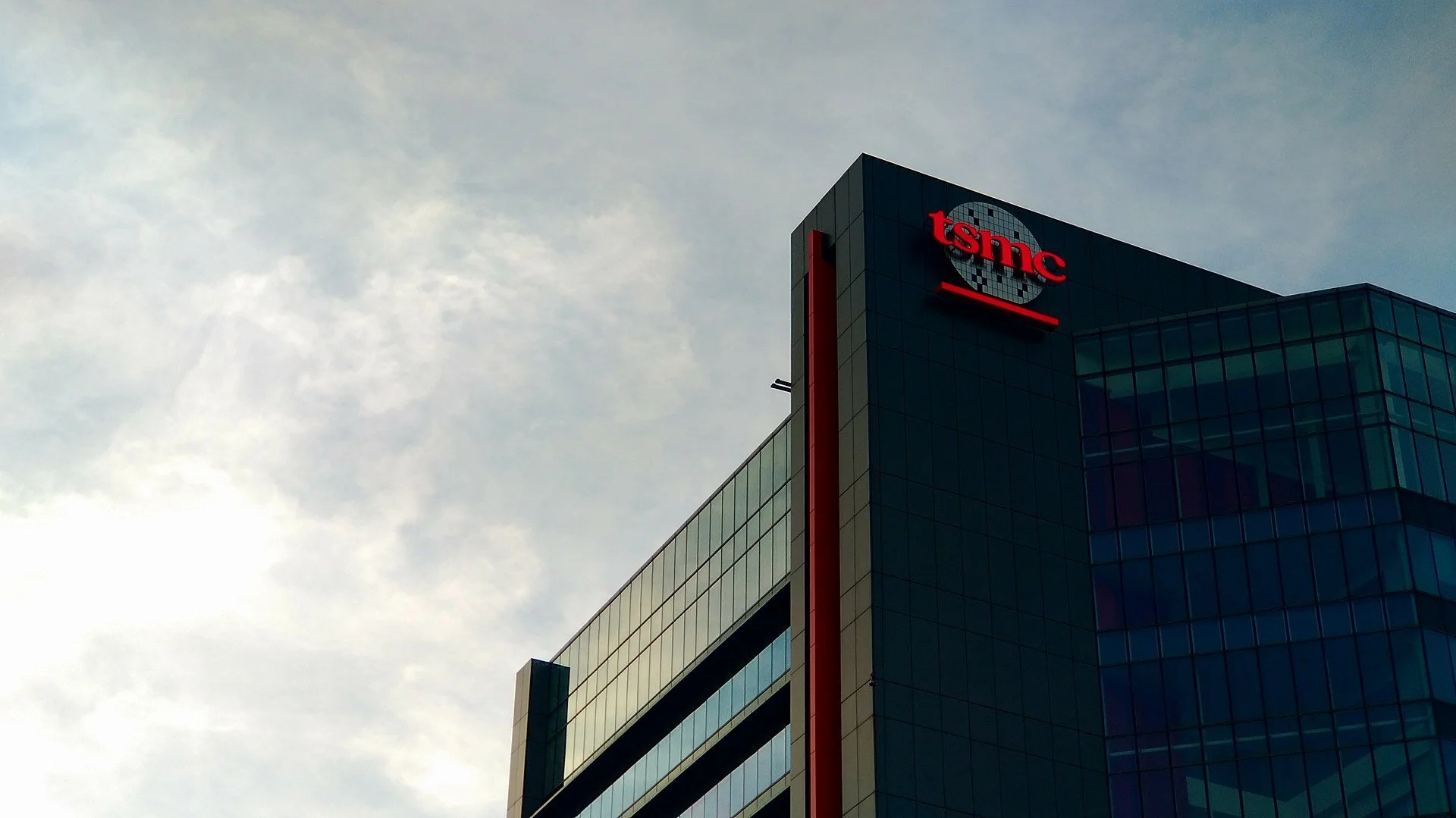
TSMC’s site at the Central Taiwan Science Park is home to FAB 15, a major 12-inch GIGFAB complex. It is the birthplace of the world’s most advanced nodes, a critical component of modern AI data centers.
Photo Credit: Briáxis F. Mendes
On August 5, 2025, Taiwan Semiconductor Manufacturing Company (TSMC) detected “unauthorized activities” within the company's high tech fabrication facilities. In these facilities, also known as GIGAFABS, the world's most advanced chips are created to be supplied to well-known companies such as Nvidia, Apple, Google and Amazon. No other company has been able to replicate TSMC’s ability to manufacture such cutting-edge chips, and in the foreseeable future no company will.
The unauthorized activity within the company’s walls involved three individuals. Two of them are current TSMC employees and one is a former employee now working for Tokyo Electron, a semiconductor manufacturing equipment company in Japan. They were indicted by Taiwanese prosecutors under Taiwan’s Trade Secret Act (TSA) and National Security Act (NSA). As defined by Article 2 of the TSA, a trade secret is considered to be information unknown to the general public with significant economic value. When the confidential information is transferred to a foreign entity, the NSA establishes it as a national security threat.
Given the third individual's affiliation with Tokyo Electron, investigators were initially unsure whether the data was intended to improve that company's manufacturing capabilities. The prosecutors were unaware of the foreign company’s relation to this incident until January 5, when they discovered confidential information on the subject’s cloud storage. The stolen data contained critical and highly confidential information about TSMC’s 14nm processing technology with significant potential to improve artificial intelligence (AI) data center operations.
The theft follows a decade-long pattern of data breaches and leaks at TSMC. Firstly in 2018, TSMC was forced to shut down its GIGAFABS in Tainan, Hsinchu and Taichung following a ransomware attack. Experts investigating the attack discovered it to be a variant of 2017’s “WannaCry” ransomware attack that allegedly originated from North Korean hackers. Then, in 2023, it was confirmed that Russian-speaking cybercriminals hacked one of TSMC’s hardware suppliers, Kinmax, and then held its data for a ransom of 70 million New Taiwan Dollars. Repeated targeting of TSMC suggests coordination efforts by external actors that could compromise its leverage with the U.S. in the race for global AI dominance.
A Background of the Company
TSMC is uniquely positioned in the global market. As of today, they control 72% of the foundry market. Although they may not dominate the market for designing chips, they leave an enormous impact by signing contracts to manufacture them on behalf of designers like Nvidia. A useful analogy is that they build the ovens, while Nvidia is the chef baking the cakes. It is also important to consider that their most powerful buyers in the global market are American companies. TSMC promises a future of chips that can enhance technological capabilities in the U.S. while minimizing energy expenditure. TSMC’s emphasis on energy efficiency is critical for the future of big American businesses such as OpenAI, where growing energy demands present serious operational challenges.
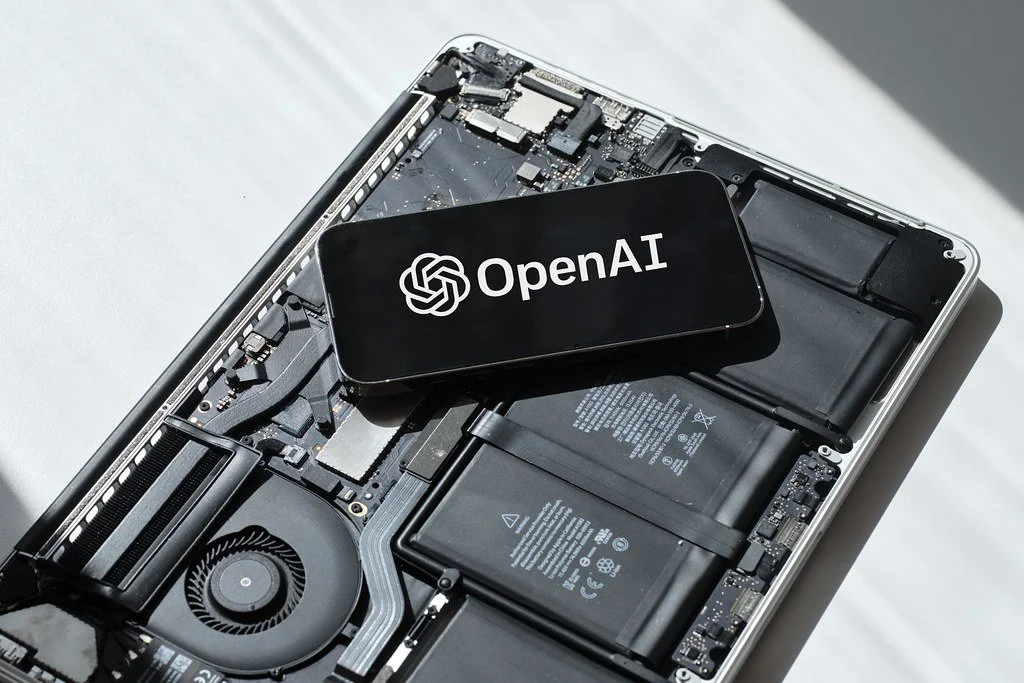
This relationship between semiconductor manufacturing and artificial intelligence is represented in the image above, which shows a smartphone labeled with the OpenAI logo placed inside exposed hardware. The photo symbolizes how AI companies ultimately depend on physical semiconductor infrastructure to function.
Photo Credit: Site GPT
The power demand from AI-focused data centers in the U.S. could rise more than thirtyfold by 2035 to about 123 gigawatts from roughly 4 gigawatts in 2024. This poses a great operational challenge to grids that must also power residential communities. Maintaining this demand will require significant improvements in computing efficiency. Advances in semiconductor manufacturing, particularly energy efficient chip design, have become critical to sustaining AI growth.
Despite U.S. President Donald Trump’s push for domestic manufacturing through tariff policy, TSMC retains a unique global advantage in semiconductor production, promising chips that combine high performance with energy efficiency. This promise is ensured through their technological breakthroughs and outcompetition of domestic U.S. companies, such as Intel, which have unsuccessfully attempted to innovate beyond TSMC. Simple metrics, such as a 15% performance gain or a 30-35% power reduction hold more political power than one may observe at first glance. Not only should this notion be very appealing to private American companies such as Nvidia and OpenAI, but to the presidential administration itself.
Silicon Shield - the Geopolitics of TSMC
As previously discussed, the consistent innovation from this Taiwanese company creates a so-called “silicon shield” for the U.S. Given TSMC’s particular expertise, the U.S. would face a multi-year setback if the company’s operations were disrupted. The country would likely rely more heavily on Intel, which would be a significant disadvantage amidst competition with China in the race for global AI dominance. The relationship between the three nations only gets more complex as conversations of a potential Chinese invasion of Taiwan become more serious.
U.S. intelligence indicates Chinese President Xi Jinping has instructed the People’s Liberation Army to prepare for a successful invasion of Taiwan by 2027. Just in the past year, Chinese armed forces made significant gains towards this goal. According to U.S. Department of Defense, they have made significant improvements in long-range strike, joint firepower and counter-intervention operations. These advancements pose serious threats for the future of Taiwan and reinforces their need for U.S. support. This creates a symbiotic relationship where the U.S. needs the TSMC to strengthen its chip manufacutring while Taiwan is increasingly reliant on the U.S. for national security.

President Joe Biden visits the TSMC semiconductor manufacturing facility in Phoenix, Arizona, on December 6, 2022, where he meets with CEO C.C. Wei and other key industry stakeholders. The meeting between the President and the stakeholders of the company demonstrates the deepening ties between the Presidential administration and the company.
Photo Credit: White House
Notably, in Phoenix, Arizona, the U.S. has pursued a major industrial strategy to move advanced semiconductor manufacturing through large-scale investments in fabrication facilities. The CHIPS and Science Act of 2022, signed by President Joe Biden, solidified federal goals to strengthen domestic technological ability, authorizing $280 billion for research and $52 billion to semiconductor manufacturing and development. Following the passage of this act, TSMC committed more than $165 billion in private investments to expand advanced fabrication facilities in Arizona, supported by federal subsidies and tax incentives.
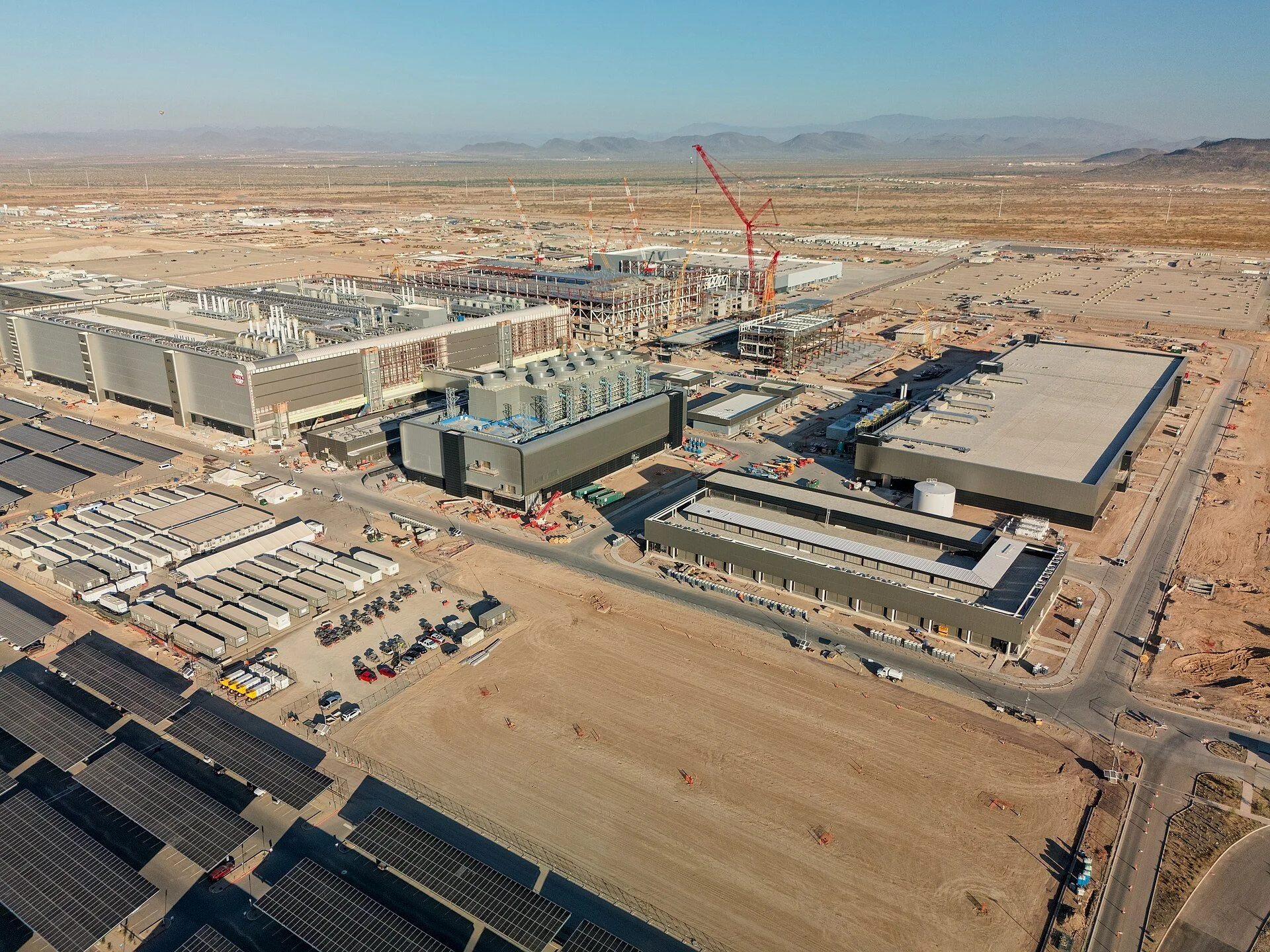
TSMC fabrication facilities under construction in Arizona following the multi-billion dollar investment into expanding domestic AI infrastructure. The movement of TSMC facilities into the United States reflects efforts to increase domestic manufacturing capabilities and reduce over-reliance on international semiconductor manufacturing.
Photo Credit: Hunter Trick
Although this relationship may appear largely transactional, the recent approval of an $11.1 billion arms package suggests deeper diplomatic ties between the two countries. The deal, which was strongly condemned by the Chinese Communist Party (CCP), includes anti-tank and anti-armor missiles, HIMARS rocket systems and loitering munitions. It follows a $330 million agreement in November for aircraft spare and repair parts.



U.S.-supplied HIMARS rocket systems acquired by Taiwan through their multi-billion dollar arms package deal. The deal reflects a diplomatic relationship with an emphasis on their national security, rather than a transactional one solely focused on semiconductor manufacturing.
Photo Credit: U.S. Army photo

Despite condemnation from the CCP and increased competition from companies such as Intel, TSMC remains the U.S.’ primary chip supplier, reinforcing the resilience of the “silicon shield” theory. TSMC’s manufacturing capabilities support a future of sustainable AI infrastructure that will strengthen the U.S.’ position in the race for global AI dominance. However, data breaches within TSMC’s manufacturing facilities could compromise its competitiveness in the global foundry market and, by extension, weaken the silicon shield they have built.