Nepal, Sudan and Palestine: Social Media as a Civilian Tool for Protest, Mobilization and Resistance Against State Violence
As of October 2025, 5.66 billion people use social media. This massive consumption of online content gives users the opportunity to amplify their voice to a global audience. For civilians who want to speak about crises around the world — like the recent events in Nepal, Sudan and Palestine — social media is a powerful instrument for spreading their advocacy and making real change.
Nepal
Nepal ranks 64th in terms of global poverty rates, as 25.2% of the population currently lives below the national income threshold. This contrasts heavily with the lavish lifestyles of the upper class, like government officials. Nepali social media users have posted the relatively grand conditions these officials’ kids flaunt online, displaying the income disparity to the country. The common folk were enraged by the inequality — which they claim is funded by taxpayer money — and began protesting online.
Nepali Gen-Z users expressed their distaste of the through hashtags like #NepoKids and #NepoBaby. These hashtags helped connect people across the country who shared similar opinions about the imbalance, mobilizing digital protesters on TikTok, Instagram and X. Using these hashtags, protesters called for anti-corruption reforms, financial investigations of government officials and the transfer of assets to public ownership.
The Nepali government, claiming protesters were spreading fake news, gave various platforms an ultimatum: register with the government or be banned from the country. Twenty-six platforms didn’t comply and were restricted on September 4, 2025. Gen-Z didn’t give up, instead turning to TikTok, one of the few platforms still operating. They planned in-person protests against both the income disparity and the social media ban.
Young protesters soon gathered in front of the parliament building in Nepal’s capital, Kathmandu, where violence erupted as police started shooting rubber bullets and water cannons on September 8. Gen-Z protesters responded to the police violence by burning down government buildings and politicians’ residences on September 9. They didn’t stop when the social media ban was lifted later that day. By the end of the day, Prime Minister Sharma Oli resigned after protesters entered his office and demanded he take accountability for the 19 demonstrators killed by police.
With a vacant head of government, Nepali Gen-Z took to social media again to enact change. The military inherited the country’s power in the absence of a prime minister, and they tasked a Nepali Discord server with over 100,000 members to name who they would prefer to fill the position. This platform, which is commonly used for chatrooms, allowed users to debate their opinions on the candidates extensively before they made their final choice. The discussion was even streamed on YouTube to increase access. Former Chief Justice Sushila Karki won the unofficial election and was then appointed interim prime minister by President Ram Poudel, until snap elections take place in March. Parliament must elect the prime minister by law, but Poudel, the head of state, invoked his own interpretation of Nepal’s constitution to select a temporary one so he could protect national unity. Through social media, Nepali digital protesters coalesced through their grievances, mobilized protests, and voted for an interim leader.
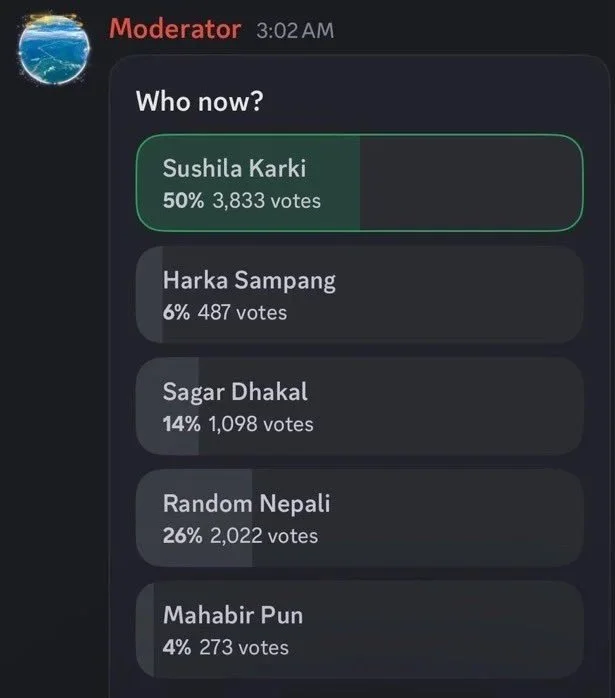
An X post shows Karki won the unofficial poll held by Nepali users on Discord to indicate their preferences for the new prime minister after Oli resigned. This shows the impact of civilians leveraging social media to their advantage.
Photo Credit: Rohit
Sudan
Like the Nepali, many Sudanese civilians caught in Sudan’s recent civil war connected on social media. In 2021, the Sudan Armed Forces (SAF), the official government military, took complete control of Sudan in a coup. The SAF claims they sought to stabilize the country in its transitional state after President Omar al-Bashir was ousted in 2019. The opposing paramilitary group, the Rapid Support Forces (RSF), seeks to take Sudan from the SAF for the country’s resources; they have fought over territory, trade routes and oil since 2023. This struggle has killed hundreds of thousands of Sudanese and displaced millions. Through social media, individuals and organizations are finding ways to support civilians caught in this civil war on a domestic and global scale.
The Girifna movement, meaning “we are fed up” in Arabic, was started by Sudanese youth in 2009 to protest against the incumbent National Congress Party (NCP) during Sudan’s 2010 elections. Although the NCP is no longer in power, Girifna remains active online to spread awareness about the crises caused by the ongoing civil war. The movement posts graphics announcing protests and videos displaying the poor living conditions of the Sudanese on its Facebook and X pages. Girifna has also used its online platform to collaborate with other international advocacy organizations to organize and promote a rally in Washington, D.C. These organizations urged Former United States President Joe Biden to send humanitarian aid and garner international support for the country’s civilians.
People in Sudan’s capital city of Khartoum requesting food or help finding missing loved ones are using a popular hashtag, “#حوجة_الخرطوم,” meaning “#Needed_Khartoum.” Razan Elshazali, an active X user, linked it in a post asking for more medical resources and thanking those who had already donated to Bahri hospital. While this hashtag is solely for Khartoum, there are others designated for various regions across Sudan, making food requests easier. Unlike the Nepali hashtags, which helped posts go viral, Sudanese hashtags categorize similar posts together for relevant users to browse, localizing civilian communication.
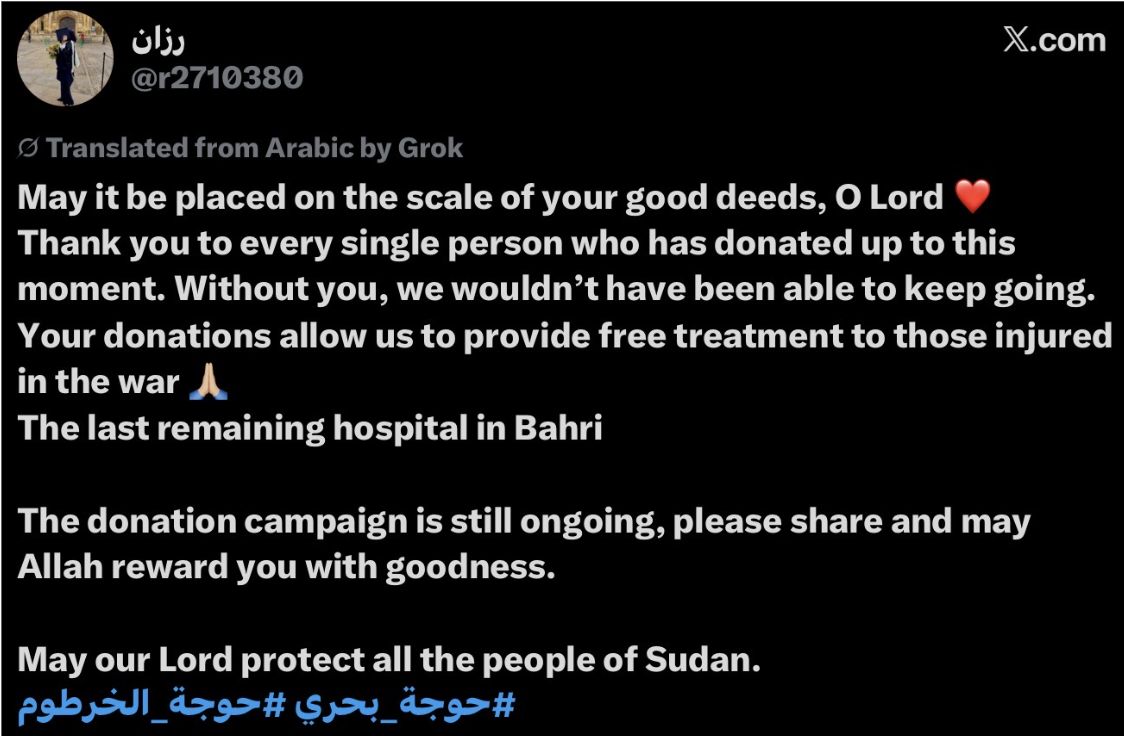
Razan Elshazali’s X post, originally in Arabic, requesting more medical supplies for Bahri hospital and thanking previous donors. “#حوجة_الخرطوم” can be seen linked in the post.
Photo Credit: رزان
Social media also gives non-governmental organizations a platform to support Sudanese civilians. Doctors Without Borders (MSF) is one such organization that treats the medical needs of people stuck in humanitarian crises free of charge. Their Instagram account spreads awareness about their patients and includes a link for users who wish to donate to “help save lives.” They also encourage social media users to post their informative graphics about type 1 diabetes to spread awareness about its high cost. MSF uses donor money to provide insulin pens to Sudanese with and care for refugees from the war-torn city of al-Fashir. Since over 70% of the country’s hospitals have been destroyed during the civil war, this aid is invaluable to civilians requiring an alternative source of medical resources.
Palestine
Protesters spreading awareness of Gaza’s humanitarian crisis similarly use social media to reach international audiences. On May 26, 2024, the Israeli government sent an airstrike to Al-Mawasi, a town in the southern Gazan city of Rafah. This was part of their siege of the Gaza Strip to retaliate against Hamas’s terrorist attacks and rescue Israeli hostages. The strike garnered international condemnation because the Israeli Defense Forces (IDF) had previously designated Rafah as a “safe zone,” which led many Gazan refugees to concentrate there. At least 45 people were killed in the strike.
Richard Peeperkorn, the director of the World Health Organization in the occupied Palestinian Territories, had declared that “All eyes are on Rafah” in response to the growing tensions prior to the strike. This slogan was later featured in an AI-generated image with tents forming the words. The image spread quickly across Instagram, reaching over 46 million shares within a week. Celebrities like Bella Hadid posted the AI image online, and others, like Pedro Pascal and Mark Ruffalo, posted the slogan, amplifying the message through their large online followings. However, this post generated controversy because its use of AI didn’t accurately portray Rafah, notably the extent of death and destruction. There are fears that such images will reduce the impact of real pictures portraying the uncensored condition of Palestine. Still, the simplicity of using AI on social media contributed to the message’s exposure.
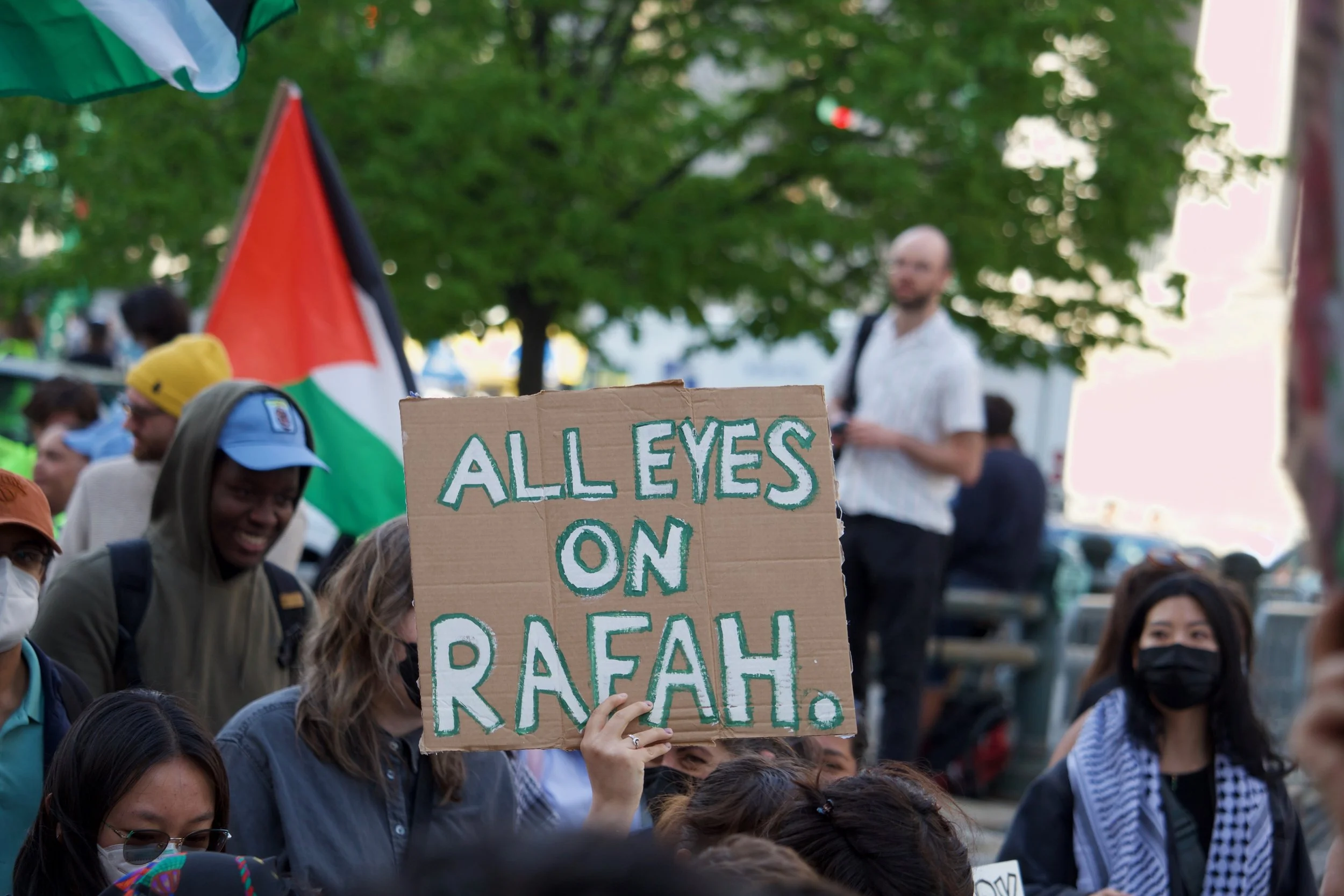
A protester holds a sign with the “All Eyes on Rafah” slogan on it at a protest in New York City in May 2024. The phrase’s popularity online made it an effective message in demonstrations to spread awareness about Rafah’s condition.
Photo Credit: Pamela Drew
Other events in the region have prompted online advocacy. On January 29, 2024, IDF soldiers shot at the car of a Palestinian family fleeing their neighborhood in Gaza. Six-year-old Hind Rajab survived the initial shots and called emergency services for help from within the car, but the soldiers later opened fire again and killed her. Two paramedics trying to find her were then killed in a bomb attack by the IDF. Rajab, her family and the paramedics were found 12 days later alongside over 330 bullet holes in the family’s car. Rajab’s death sparked international outrage, as her call for help was recorded and posted on social media, driving more protesters to act.
One influencer who voiced concern over the situation was Ms. Rachel. She is a professional educator who posts about early child development on TikTok and Instagram, with a combined following of 13.7 million. Inspired by stories like Rajab’s, in May 2024, she announced a fundraising campaign for children in Gaza and other war-torn regions. Despite facing criticism for supporting Palestinian children, Ms. Rachel continues to use her social media influence to spread awareness about the risks children face in Gaza. For example, she posted pictures of the dress that she wore to Glamour’s 2025 Women of the Year Awards. It featured drawings created by children in Gaza to protest against the danger they face. The publicity of her outfit exposed their condition to the world and humanized them.
Social media users commenting on Nepal, Sudan and Palestine aren’t powerful world leaders or tech billionaires; they’re ordinary people who post from their phones, tablets and computers. They found their audience — whether it was their fellow citizens enraged by a corrupt government, someone nearby with medical resources or an existing large following who could be swayed by a symbolic dress. Social media has become an influential tool of the modern world to fight state injustice, and it’s only growing more powerful.