On February 28, Israel and the United States (U.S.) attacked Iran, killing its leader Ayatollah Ali Khamenei alongside other government officials. Two days later, Hezbollah — a close ally of Iran and a paramilitary terrorist group based in Lebanon — launched retaliatory rocket strikes against Israel. Despite a failed ceasefire, Israel and Hezbollah have continued to fight near the border. Hezbollah isn’t a state actor and lacks traditional access to state resources. So how has the organization solidified itself so effectively in Lebanon and maintained its decades-long struggle against Israel, which has one of the strongest armies in the world?
Civilian Dependency
Following Israel’s 1982 invasion of Lebanon, Hezbollah created the financial institution Al-Qard al-Hassan (AQAH). The invasion damaged the country’s economy, allowing AQAH to alleviate the resulting economic strain felt by the Lebanese people. Even today, it offers loans of up to $5,000 to civilians in exchange for the same amount in gold, with an additional 20% margin. In accordance with Islamic financing rules, the loans aren’t subject to interest. However, Lebanon’s central bank doesn’t regulate these loans, allowing for the 20% margin. While the association mainly grants loans, it also provides ATM machines, making it easier for civilians to manage their money.
AQAH took on customers who previously used the traditional banking system after it collapsed in October 2019, encouraging even non-Shiites to use their services. This liquidity crisis was caused by the government’s severe mismanagement of the economy, resulting in the foreign exchange halting, banks closing and the foreign debt defaulting. COVID-19 and the Beirut port explosion further damaged the economy. In the context of a hindered economic state, AQAH demonstrated its economic reliability where the traditional banking system couldn’t, like through unregulated gold-backed loans and ATM machines. This paved the way for its larger role in the Lebanese economy.
AQAH continues to operate after surviving the recent Israeli air and naval attacks. Lebanese people whose homes have been destroyed by Israeli airstrikes have turned to the de facto banking system to help them rebuild. Because the Lebanese recovery process is facilitated by the Hezbollah-backed organization, AQAH’s operations can financially and socially sustain Hezbollah in its continued fight against Israel. On top of that, its persistence through warfare and economic effectiveness means the Lebanese people highly depend on the organization.
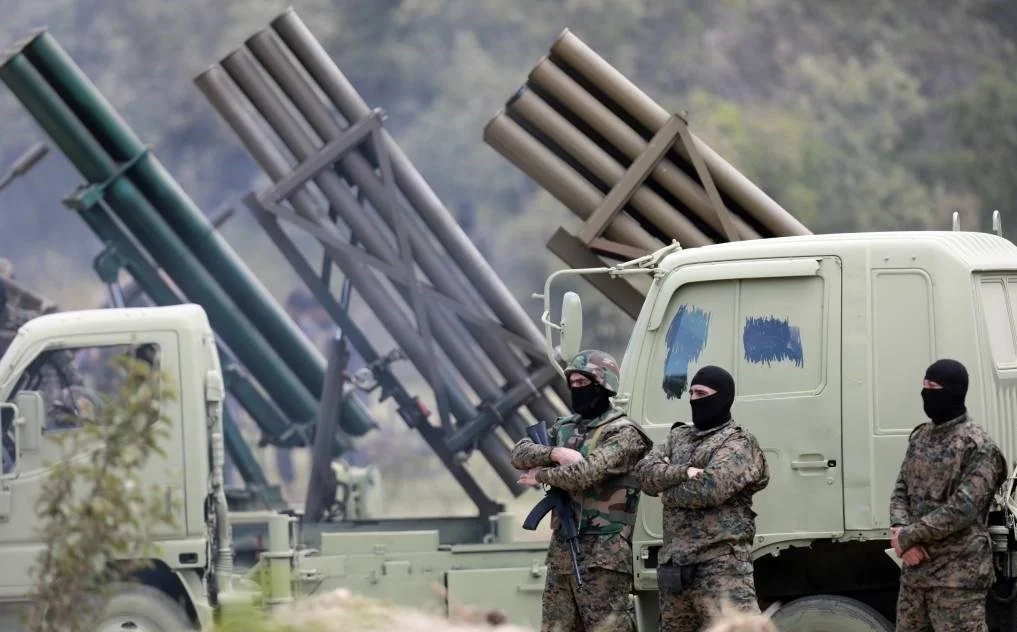
Hezbollah militants conduct a military exercise in Aaramta, a southern Lebanese village, in May 2023. Economic fallout from the war with Israel has negatively impacted many Lebanese, pushing them to seek out AQAH for help, which results in greater access to resources for Hezbollah to continue fighting.
Photo Credit: Tasnim News Agency
Hezbollah controls another association that helps with social services in Lebanon: Construction company Jihad al-Bina. The organization originally focused on rebuilding homes damaged by Israel after its 1982 invasion. Following the 2006 war between Hezbollah and Israel, Jihad al-Bina again provided reconstruction services to Lebanese civilians, increasing its local support.
In parallel with AQAH’s financial assistance, Jihad al-Bina aids civilians across the country with its direct construction efforts today. For those caught in the conflict’s crossfire, the organization helps them recover by rebuilding their homes. The Lebanese government has been ineffective in doing so because of its depleted resources, allowing Jihad al-Bina to gain public support instead. Aside from reconstruction, Jihad al-Bina also began working on agricultural projects, such as distributing seeds, to help the Lebanese grow crops rather than buying them outright. In an economy still recovering from the liquidity crisis, this helps increase the nation’s food supply and financial stability.
Hezbollah also extends its social operations into public health through the Islamic Health Organization (ISO). The group runs hospitals, clinics and ambulances, mainly in majority Shiite areas. Civilians are incentivized to use ISO resources because its services are either subsidized or free, and state-owned facilities are commonly closed or understaffed due to economic challenges. The raging war provides a constant source of injuries, causing civilians to seek medical help and fueling a need for the ISO.
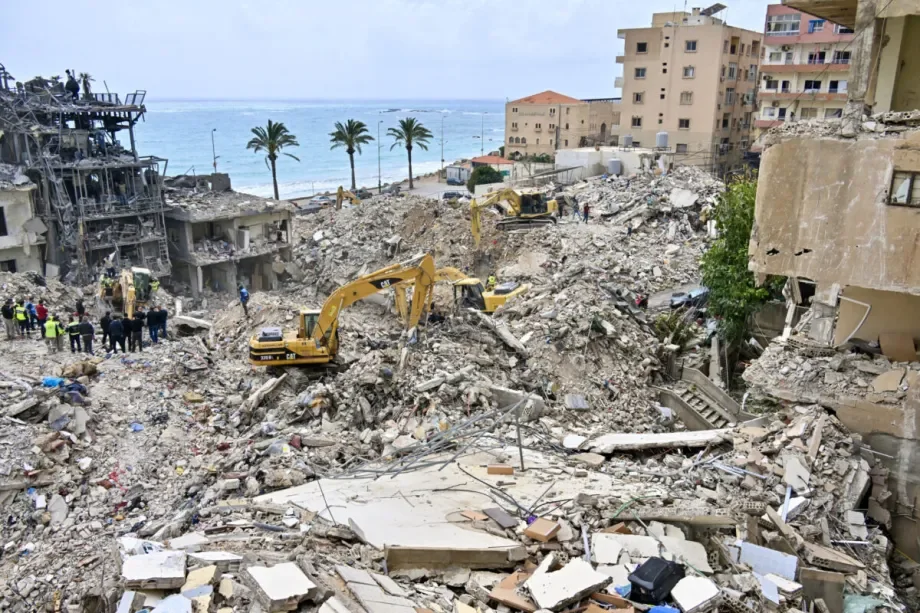
Search and rescue teams look for civilian bodies following Israeli strikes in Tyre, Lebanon in April 2026. Organizations like Jihad al-Bina and the ISO help Lebanese communities recover from Israeli attacks, cementing Hezbollah in their daily lives.
Photo Credit: Houssam Shbaro
However, the benefit of better medical resources for civilians comes at a cost for non-Hezbollah medical organizations. As a political actor, Hezbollah uses its parliamentary voting power to divert state resources to its own systems — like the ISO — to please its constituents. For instance, during the COVID-19 pandemic, Hezbollah diverted international funding to develop its own response initiatives. While ISO may benefit the Shiite public, it still supports Hezbollah’s military in its fight against Israel by providing an ambulance fleet for its operations. In one operation, ISO sent ambulances to evacuate Hezbollah operatives near the Lebanon-Syria border. So, even though Hezbollah-run public health programs like the ISO benefit the public, they also aid Hezbollah military attacks. By diverting state resources to fulfill its own private agenda, this stunts the growth of effective public improvements to the country, like stronger reconstruction efforts or an economic recovery.
Financial Operations
Core to Hezbollah’s financing systems is the direct support that it receives from Iran. The state transferred about $1 billion in 2025 alone. Iranian diplomats have helped achieve this by delivering funds to Hezbollah with U.S. dollars hidden in their suitcases. They travel on commercial flights and avoid airport inspection because of their diplomatic immunity, providing a key cover for the funds transfer.
Hezbollah’s operations also rely on a global network of illegal money laundering enterprises, mainly in South America and West Africa. The organization requires a reliable influx of funds on top of Iran’s support, especially after the 2006 Lebanon War hurt the country’s economy. By laundering money, Hezbollah moves funds across borders undetected until they reach Lebanon. Failure to launder funds increases the likelihood of U.S. detection. This would significantly risk operations, since U.S. counterterrorism efforts include identifying and cutting off terrorist organizations’ funding streams.
Hezbollah’s External Security Organization Business Affairs Component (BAC) partners with South American drug cartels, like Oficina de Envigado in Colombia, for transnational drug trafficking. Under the black market peso money laundering scheme, BAC and its partners sell cocaine to European drug markets then launder that money through multiple systems.

Hezbollah dips into South American drug trafficking operations and sells to European markets, gaining additional funds on top of Iran’s support.
Photo Credit: Images_of_Money
In West Africa, financiers in the precious stones and high-value art markets create front companies to legitimize drug-trafficked funds for Hezbollah. In another operation, the Lebanese Canadian Bank (LCB) participated in an illegal exchange with the U.S. used car market. LCB wired drug proceeds to the U.S. to purchase vehicles, which were then exported to West African countries and exchanged for cash outs shipped back to Lebanon. After LCB’s ties to Hezbollah were exposed, Banque de Liban – Lebanon’s central bank – revoked LCB’s banking license, ending the operation. However, the same practice was reported in Canada in early 2026 when immigration officials accused a Lebanese car exporter of laundering for Hezbollah.
Drug trafficking is an effective funding method because it exploits the border policies and banking systems of globalization. Hezbollah benefits from state borders open to services such as the car market, disguising its operations and laundering money internationally. Without the interconnectedness of banking systems, wiring money between countries would be much harder.
The money that Hezbollah gains is crucial; not only does it fund the fight against Israel, but it also provides social services across Lebanon. These programs cement the organization as an integral body in everyday life for a large portion of the civilian population, especially amidst the ongoing conflict with Israel. Since Hezbollah contributes both to the harm inflicted on the Lebanese and its solution, the organization has created a cycle from which it benefits greatly. With more and more non-state actors accumulating power against even the most militaristically developed countries, groups like Hezbollah, who can find a balance between aid and detriment, may continue to operate for a long period of time.