Funded by a Dictator?: Former French President Nicolas Sarkozy Convicted in Libyan Campaign Funding Scandal After Decades of Allegations
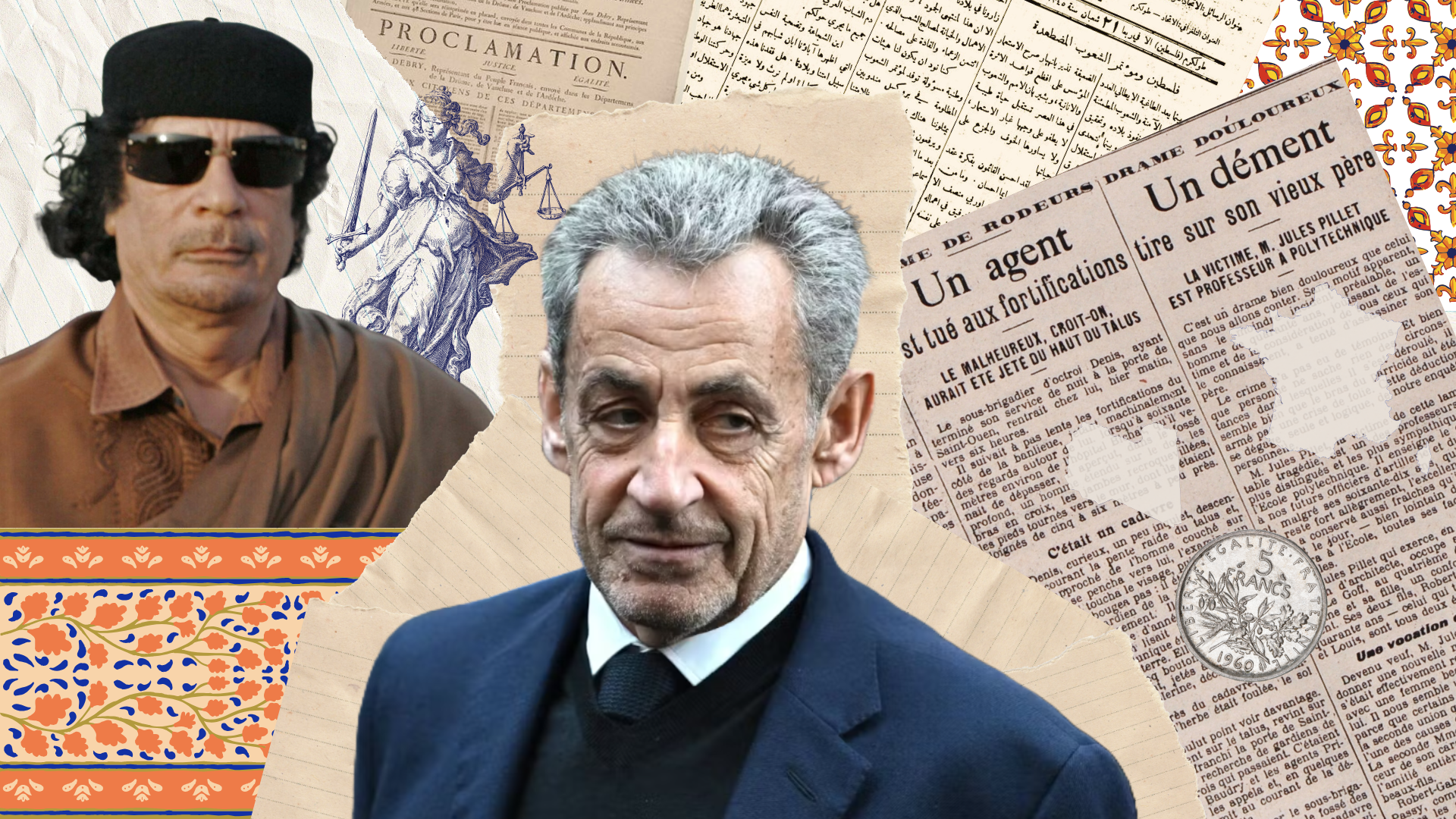
Nicolas Sarkozy (right, shown in 2025) has been convicted of criminal conspiracy for his involvement in the production of a “corruption pact” with the regime of deceased Libyan dictator Muammar Gaddafi (left, shown in 2008). Accusations of corruption, embezzlement and criminal conspiracy have dogged Sarkozy for years.
Former French President Nicolas Sarkozy was sentenced to five years in prison by a Paris court on September 25, 2025. Sarkozy was found guilty of criminal conspiracy in a case that has haunted his political legacy for more than a decade. Prosecutor Sebastien de la Touanne said that in the 12 weeks of hearings, “a very dark picture of a part of our republic has emerged.”
This case has only added to rising political uncertainty in France, a country recently riddled with political quandary. In the past couple of years, France has experienced shocking parliament dissolvements and gone through five Prime Ministers, one resigning after only 14 hours. Such turmoil has increased skepticism in an already divided population that largely distrusts the country's political institutions. Currently, around 74% of French citizens have no trust in their government, a number conceivably darkened by the continuous shadow of scandals such as Sarkozy's.
The court ruled that Sarkozy, while serving as France’s Minister of the Interior between 2005 and 2007, allowed close aides to produce a “corruption pact” with the regime of Libyan dictator Muammar Gaddafi.
Sarkozy was also accused of utilizing secret campaign financing in exchange for political favors and denied wrongdoing throughout his trial. Calling the case a “scandal,” Sarkozy continued to insist upon his innocence, declaring throughout the trial: “What credibility can be given to such statements marked by the seal of vengeance?”
In addition to his five-year prison sentence, Sarkozy was fined €100,000 ($117,500 USD) and given a five-year ban on holding public office. He has since filed an appeal and left jail after 20 days following a court-ordered release. Pending his appeal, which is scheduled for March, Sarkozy has been placed under strict judicial supervision.
Origins of the Scandal
Sarkozy has faced allegations of receiving Libyan funding since the 2011 civil war in Libya, with journalists, news outlets and Gaddafi himself claiming that the regime had poured millions into Sarkozy’s 2007 presidential campaign. The 2011 civil war saw the overthrow and collapse of Gaddafi’s regime, as well as his death.
In April 2012, Mediapart, a French investigative newspaper, published what appeared to be a Libyan intelligence memo that suggested a €50 million ($58,265,000 USD) funding agreement for Sarkozy's 2007 presidential election campaign. The memo was signed by Abdullah al-Senoussi, the brother-in-law and intelligence chief of Gaddafi. This furthered public interest and gave traction to the scandal despite Sarkozy and his legal team strongly contesting this document, repeatedly claiming it was a forgery.
A central and constant figure of this case was Ziad Takieddine, a Franco-Lebanese arms dealer who claimed to have transported suitcases of cash totalling around €5 million ($5,874,000 USD) from Libya to intermediaries in France. Takieddine—often called charming, yet explosive and tumultuous—was the main accuser.
Takieddine’s story changed multiple times, as, in 2020, he retracted his claims, raising suspicions in France that Sarkozy and his close allies paid him to change his story. However, the 2025 convictions did not depend on Takieddine’s statements but rather a “body of serious, precise and consistent evidence.” Takieddine died on the eve of Sarkozy’s sentencing, September 23, succumbing to a longstanding illness and depriving prosecutors of their main witness; no foul play was suspected in his passing.
Investigators have also examined various financial records, offshore transfers and meetings between Sarkozy and his inner circle, including Claude Guéant and Brice Hortefeux (Sarkozy’s Ministers of the Interior, with Guéant also serving as Secretary General), and Libyan officials.
What the Court Found
According to the financial prosecutor’s office, Sarkozy’s initial charges were “concealment of embezzlement of public funds, passive corruption, illegal campaign financing and criminal conspiracy with a view to committing a crime.” During the trial, prosecutors sought a seven-year jail term for Sarkozy, along with a €300,000 ($323,860 USD) fine and a five-year ban on holding public office.
While delivering her verdict, Judge Nathalie Gavarino said that although there was no definitive proof that Libyan money directly entered Sarkozy’s campaign accounts, there was sufficient evidence of a “criminal association” to justify the conviction. As a result, the court acquitted him of several other charges including passive corruption, misappropriation of Libyan public funds and illegal campaign financing.
Gavarino said Sarkozy and his allies’ offenses were of “exceptional gravity” and warned of how they could undermine public trust in institutions in France. Seven individuals other than Sarkozy were convicted for their involvement in the scandal, the most frequent sentence being six years in jail and a €4 million ($4,629,000 USD) fine. Charges for these individuals, all holding high-ranking bank or governmental positions, include, but are not limited, to forgery, aggravated money laundering, criminal conspiracy, corruption and complicity in influence peddling.
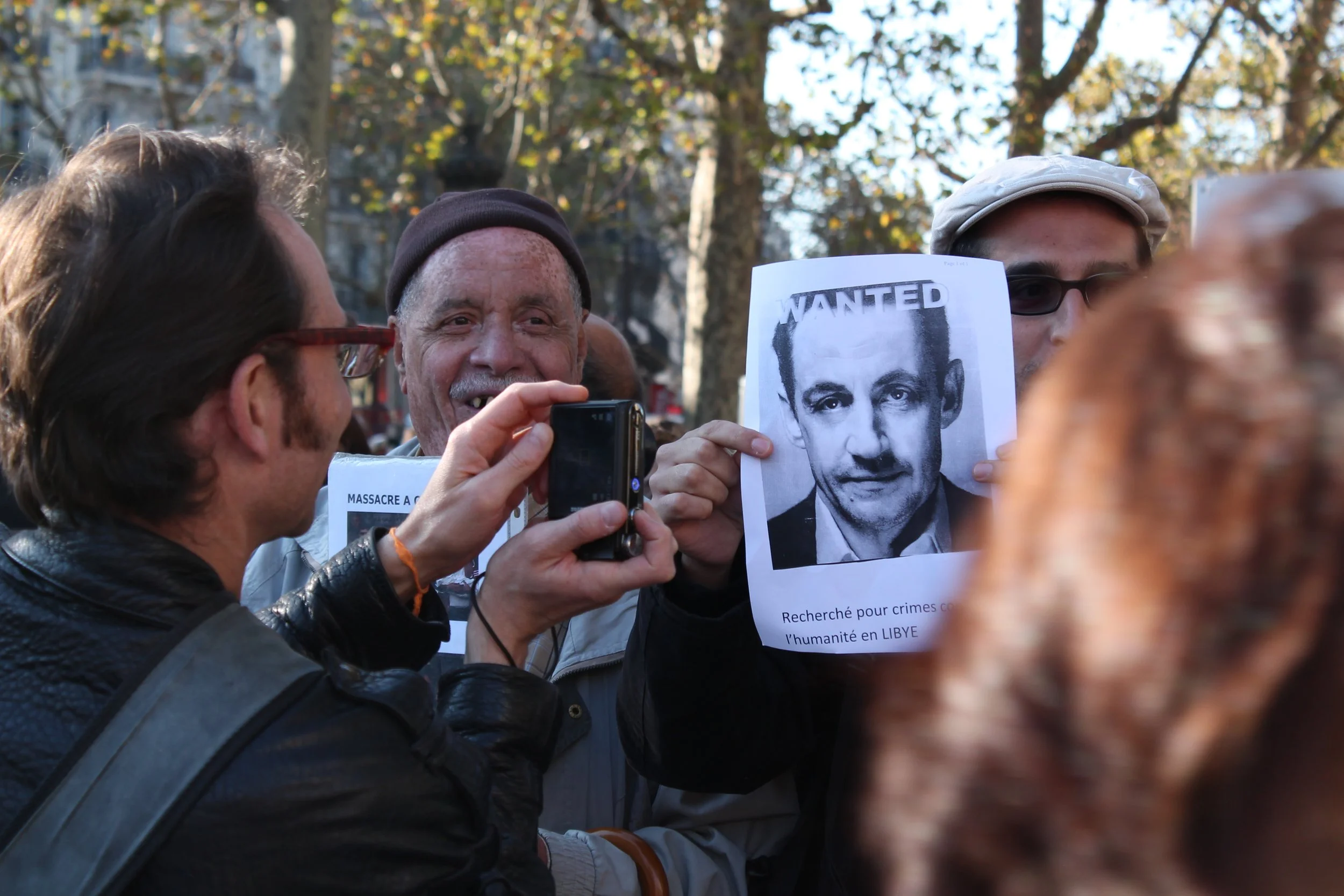
Translation: “Wanted: Nicolas Sarkozy, guilty for the crimes against humanity in LIBYA.” Parisian protestors demonstrated against French involvement in Libya in October 2011. Debate surrounding the NATO-backed involvement has been reignited following Sarkozy’s 2025 trial.
Photo Credit: Jelena Prtoric
The Gaddafi Connection and Foreign Policy Implications
Sarkozy’s rapprochement with Gaddafi began in 2007, shortly after his election. Sarkozy hosted Gaddafi on a luxurious state visit to Paris’s Élysée, the residence of the French president and meeting place of the Council of Ministers, the executive branch’s main organ. Sarkozy allowed Gaddafi to pitch a Bedouin tent, a traditional North African shelter meant for harsh desert climates, in the Élysée garden. Most critics have long viewed these gestures as part of a transactional relationship in which Gaddafi’s regime offered financial support for Sarkozy in exchange for political favors.
In December 2007, Gaddafi and Sarkozy signed numerous domestically scrutinized deals that Sarkozy himself estimated to be around 10 billion euros. This included the signature of a nuclear co-operation accord and the purchase of 21 French Airbus aircrafts. Gaddafi additionally negotiated exclusively with France for six months on the purchase of 14 Rafale fighter jets and 35 combat and transport helicopters.
This scrutinized relationship came to the forefront of the geopolitical scene in 2011 when France, under Sarkozy’s leadership, played a leading role in the NATO-backed military intervention during the Libyan Civil War. As a result of this conflict, Gaddafi’s regime was overthrown and, later that year, Gaddafi himself was brutally killed by militants from Misrata, Libya's largest city.
Sarkozy’s Broader Legal Troubles
This verdict adds to a slew of legal trials and tribulations for the former president. He has previously been convicted in two other high-profile cases, a corruption-and-influence-peddling case and a campaign-finance-overspending scandal from his failed 2012 re-election bid. As a result of previous convictions, he lost his Legion of Honour, France’s highest national distinction.
Current Status
On October 21, Sarkozy began serving his five-year sentence at La Santé Prison in Paris. He rejected special treatment, saying he did not want “privileges.” 20 days later, an appeals court granted him release under strict judicial supervision.
Conditions of his release prevent him from leaving France, contacting his co-defendants or communicating with people associated with the Libyan regime. Officials cited risks of witness tampering and prejudice, given his high-profile status and ongoing investigations into such crimes.
Sarkozy’s next scheduled court appearance is in March, when the appeals court is set to review his case once again. In the meantime, Sarkozy remains one of the most polarizing figures in French politics: influential among certain right-wing circles, yet legally constrained and clouded under scrutiny.
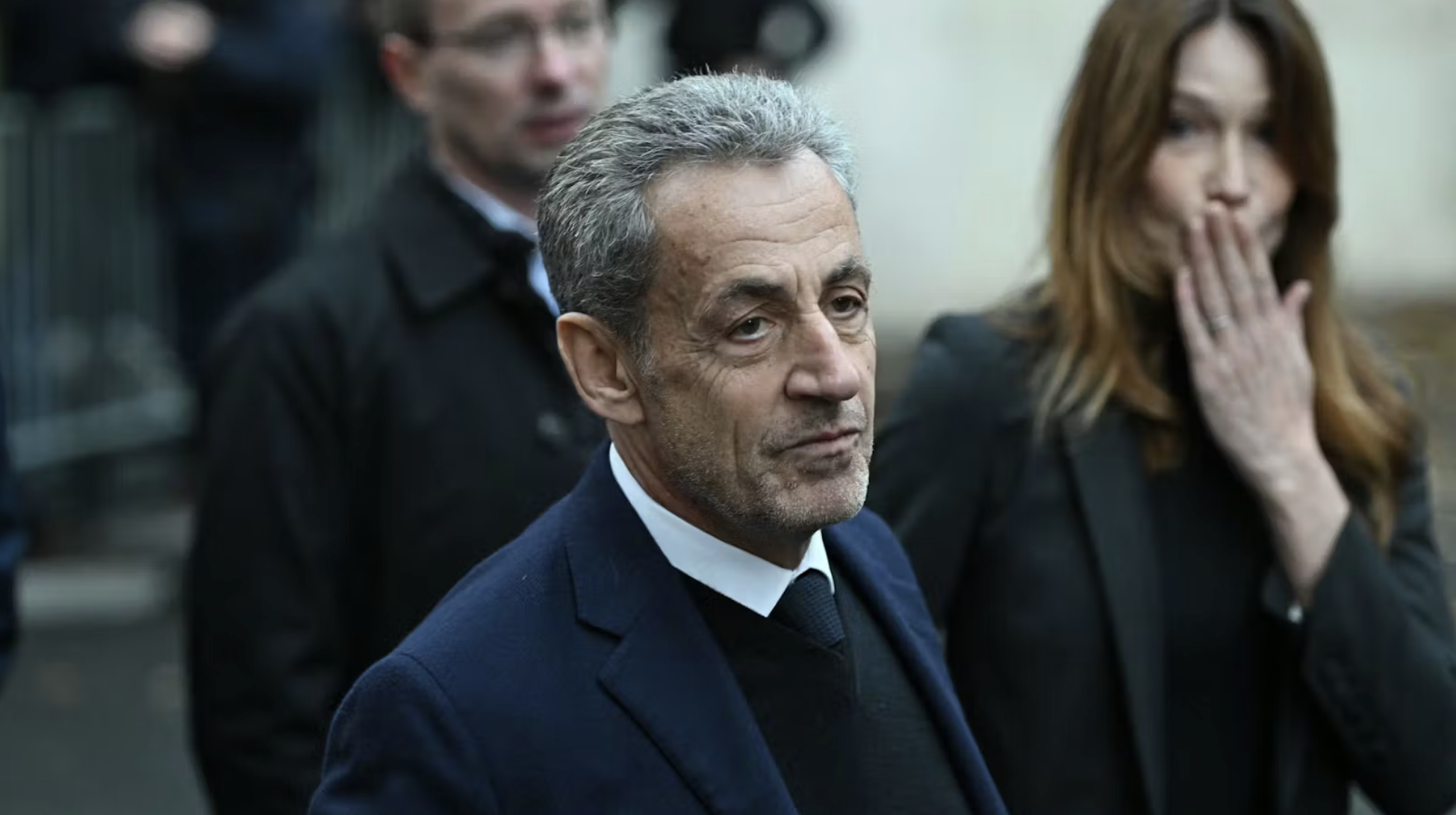

Former French president Nicolas Sarkozy and his wife, model and singer Carla Bruni-Sarkozy, as Mr. Sarkozy entered jail to begin his 5 year sentence on October 21, 2025. Mr. Sarkozy spent only 20 days in jail before being granted conditional release, after which he wrote a memoir. His book, Le Journal d'un Prisonnier (Diary of a Prisoner), reflects on his 20-day jail spell in La Santé prison in Paris; a place he describes as “hell.”
Photo Credit: Heute
The conviction of Nicolas Sarkozy marks a first in French politics: it is the first time a modern French head of state has been sentenced to prison. Though the court found no conclusive link between Libyan cash and Sarkozy’s campaign accounts, it maintained that his willingness to allow continued contact between his close entourage and the Gaddafi regime constituted a serious criminal offense. The case underscores the complex connection between foreign policy, personal ambition and finance, raising enduring questions about how democracies safeguard themselves against covert influence from authoritarian regimes.