A Fresh Start? The Global Nuclear Strategic Landscape Without START
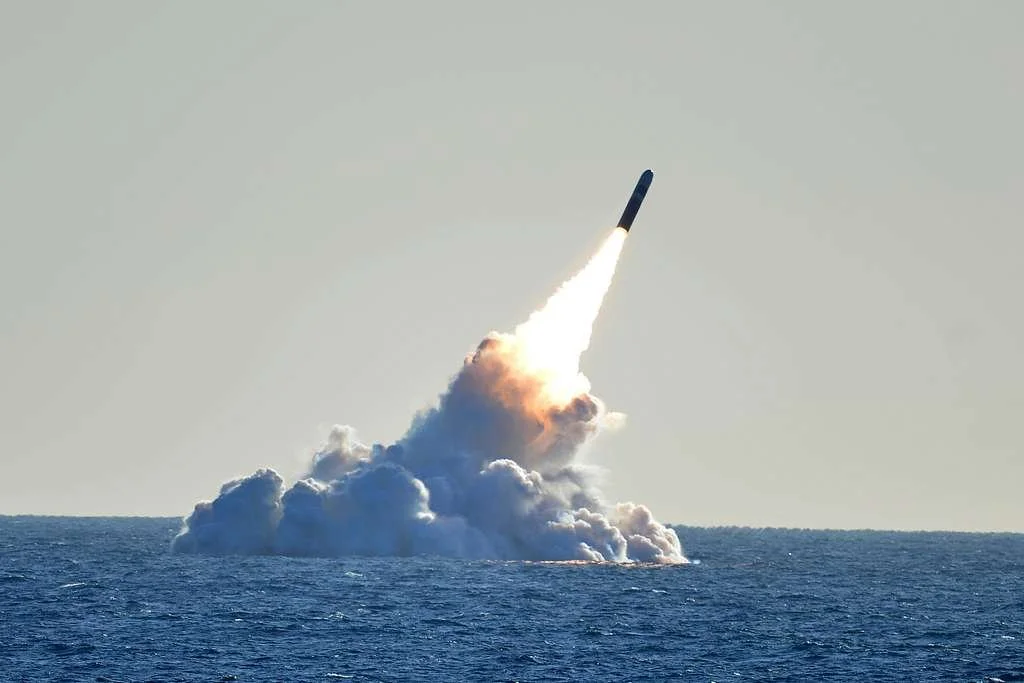
An unarmed Trident II missile, a submarine-launched ballistic missile, launches from a U.S. Ohio-class nuclear submarine off the coast of California. These tests verify the operational ability of submarine strategic weapons systems, systems the U.S. plans to expand to hold armed nuclear missiles without the legal limitations of New START.
Photo Credit: U.S. Navy
On February 5, the New Strategic Arms Reduction Treaty (New START), a bilateral treaty limiting the number of strategic nuclear warheads the United States (U.S.) and Russia could deploy, expired. Without this formal agreement, the U.S. and Russia are now free to deploy more strategic weapons: long-range nuclear weapons designed to destroy infrastructure. This transition marks the end of decades of arms control between the two nations. The only remaining legal mechanism restraining global nuclear weapon development and deployment is the Treaty on the Non-Proliferation of Nuclear Weapons (NPT).
New START’s expiration gives Washington and Moscow more opportunities to deploy nuclear tools, but it doesn’t guarantee they will take them. That being said, experts claim escalation and misunderstandings may be hard to avoid. Traditionally, arms control agreements have provided a sense of predictability, increasing communications and clarifying limitations to avoid dangerous and costly military buildups. Does the end of traditional arms control between these two nations mean the end of nuclear strategic stability? And how will it affect conflict and innovation in the new global nuclear landscape?
What was New START?
New START was an extension of earlier nuclear treaties by the same name conceived after the Cold War. Following years of dramatic nuclear weapons expansion in the late 20th century, the START treaties worked to reduce U.S. and Russian nuclear arsenals, providing a sense of stability between the two powers. New START took effect on February 5, 2011, after being negotiated by U.S. President Barack Obama and Russian President Dmitry Medvedev. Under this treaty, the U.S. and Russia were authorized to hold 1,550 nuclear warheads on deployed missiles and bombers. New START contained detailed verification measures to ensure treaty compliance, including onsite inspections, pre-launch notifications, a bilateral compliance body and shared data on the locations and technical characteristics of deployed weapons.
However, the treaty had some shortcomings. New START didn't limit non-strategic nuclear weapons — short-range nuclear weapons designed for conventional warfare — nor strategic weapons systems development. On-site inspections ceased during the COVID-19 pandemic and never resumed. Additionally, Russia has not shared data regarding its deployed strategic nuclear forces since 2022 and suspended treaty participation completely in 2023, citing Washington’s support of Ukraine in the ongoing Russo-Ukrainian War as impeding Moscow’s ability to go about business as usual. In response, the U.S. has also not published any data regarding its nuclear force deployment since 2023. The lack of data access has left both nations unable to independently verify compliance.
Clearly, New START was not a comprehensive solution to the nuclear rivalry between the U.S. and Russia. But it did provide a foundation of predictability in this rocky relationship. New START represented a mutual commitment between the two nations to avoid costly arms races. In fact, despite suspension and withholding of data on both sides since 2023, the U.S. and Russia continued to adhere to the treaty’s core numerical limits. Even weakened, New START reinforced strategic stability through an expectation of compliance. Without this treaty shaping nuclear behavior, Washington and Moscow may no longer feel constrained by previous formal obligations.
A World With Greater Nuclear Development?
In September, Russian President Vladimir Putin offered U.S. President Donald Trump a one-year extension of New START’s limitations to provide negotiators with time to devise another formal agreement. Trump has yet to take Putin up on this offer, instead designating New START a “badly negotiated deal,” and calling for U.S. experts to work on a new, improved treaty. Without New START, we have entered a period of unconstrained nuclear development and deployment. For all intents and purposes, this is uncharted territory, as most global defense professionals have only known a world with bilateral arms control between the U.S. and Russia. Christine Wormuth, president of the Nuclear Threat Initiative, an arms control advocacy group, claims that, without guardrails on the size of U.S. and Russian strategic nuclear arsenals, both nations may begin to reconsider the size of their stockpiles.
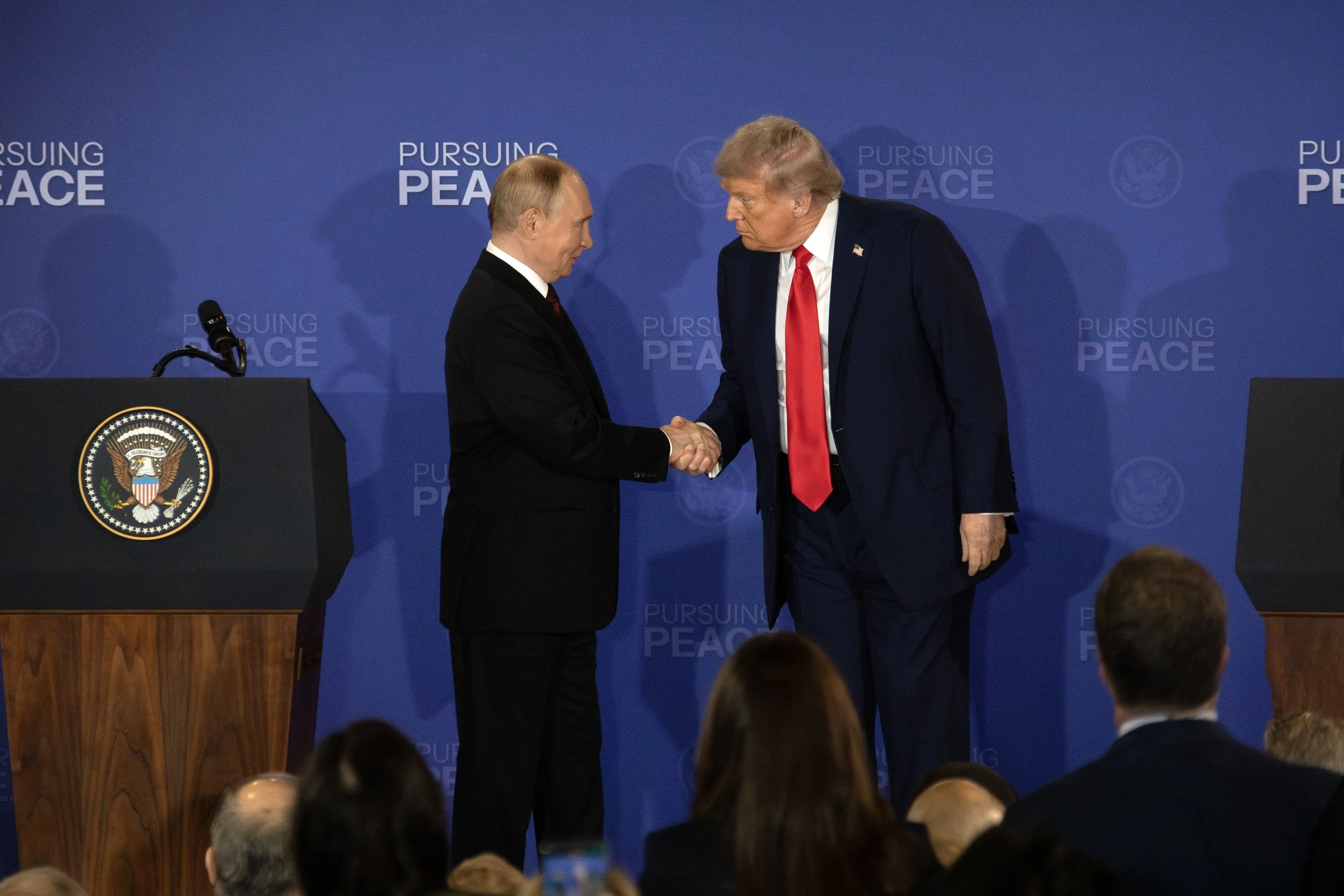
Putin and Trump shake hands after a joint press conference during the Alaska 2025 bilateral summit. Following the expiration of New START, the two leaders have been unable to agree on whether they will pursue further bilateral arms control, with Trump insisting that any new nuclear treaty must include China and account for Russia’s non-strategic weapons.
Photo Credit: Alaska National Guard
The U.S. has complicated its chances of maintaining the preexisting strategic balance in its plan to accelerate national missile defense capabilities. The U.S. 2026 National Defense Strategy acknowledged a growth in global nuclear threats and allocated $15 billion to defense spending on nuclear forces. This budget includes the purchase of next-generation bombers, reopening missile tubes on nuclear submarines and accelerating domestic uranium production. Washington has highlighted the need for a “strong, secure, and effective nuclear arsenal.” Paired with the Golden Dome, the Trump administration’s initiative to develop a national missile defense system, the U.S.’s push to enhance nuclear defense capabilities risks incentivizing similar expansion by Russia, fueling a potential arms race dynamic.
Russia’s invasion of Ukraine in 2022 additionally serves as a source of increased tension between the two superpowers. In 2020, the Russian Ministry of Foreign Affairs characterized the nation’s nuclear deterrence as “defensive by nature.” Yet, Moscow appears to have a new strategy, one involving outright nuclear gestures. Following its attack on Ukraine, Moscow began to integrate nuclear signaling into traditional warfare. In 2023, the nation transferred tactical nuclear warheads to Belarus, a key Russian ally, and began deploying nuclear-capable intercontinental ballistic missiles (ICBMs) into Ukraine. Additionally, Putin claimed Moscow will use all available means to protect Russian territory, including Ukraine, and that if anyone attempts to stand in their way, Russia will “respond immediately, and the consequences will be such as you have never seen in your entire history.” Moscow’s gradual escalation of non-strategic nuclear weapons within conventional warfare falls below a threshold necessitating a reply in kind, but presents Russia’s increasingly coercive nuclear strategy designed to deter Western powers. Russia currently holds an advantage in non-strategic nuclear weapons, such as short-range ballistic missiles, positioning the nation as poised to hedge against any U.S. technological breakthroughs or conventional military strength.
These endeavors have created an air of uncertainty about whether traditional deterrence is enough. In a world increasingly marked by attempts to project power, the U.S. and Russia might find it in their interest to expand and modernize their deployed nuclear arsenals for strategic and non-strategic use.
New Dangers and Uncertainties
Experts in nuclear strategy are increasingly alarmed by the “no-rules, no-inspections” period that started when New START expired. While some warn of an inevitable arms race and others dismiss these concerns as unfounded, there is no doubt that an action-reaction cycle will be difficult to avoid. Washington and Moscow have grown accustomed to having their strategic deployments exposed to each other. Access to precise nuclear estimates gave U.S. and Russian intelligence communities a source of confidence that safeguarded against miscalculation and misunderstandings. Now, the loss of information-sharing mechanisms and channels for bilateral dialogue facilitates worst-case scenario planning.
With the norms that have maintained nuclear restraint for decades under threat, the shared understanding of nuclear weapons’ catastrophic potential may erode. This increases the risk that nations will view nuclear weapons as practical instruments of conflict rather than a last resort. This sentiment is already evident in Moscow’s deployment of nuclear-capable Oreshnik missiles in Ukraine and U.S. defense officials’ public dedication to upgrading its nuclear triad, including capabilities across land, sea and air. Additionally, in recent years, Russia has invested in nuclear modernization with an emphasis on theater deployment, while the U.S. updates bombers and submarines with nuclear capabilities. Such a reality suggests future conflicts could revolve less around direct military confrontation and more around the manipulation of strategic thresholds.
European leaders considered New START a “crucial contribution to international and European security.” Now, they, along with other global leaders, are beginning to recognize that the U.S. and Russia may be unlikely to prioritize global nuclear stability as they did during and after the Cold War. EU foreign policy chief Kaja Kallas expressed concerns that the “expiration of the final bilateral nuclear arms control agreement between the [U.S.], which serves as NATO’s nuclear guarantor, and Russia, Europe’s principal security threat, leaves European countries in a precarious security position.”
However, unlike during the Cold War, the nuclear landscape is no longer bipolar. The U.S. and Russia may possess about 90% of all global nuclear warheads, but seven other nations around the world hold active nuclear arsenals. Doubting the credibility of extended deterrence, many nations have been incentivized to guarantee their nuclear security; France and the United Kingdom have deepened nuclear cooperation, while China has significantly increased its nuclear stockpiles.
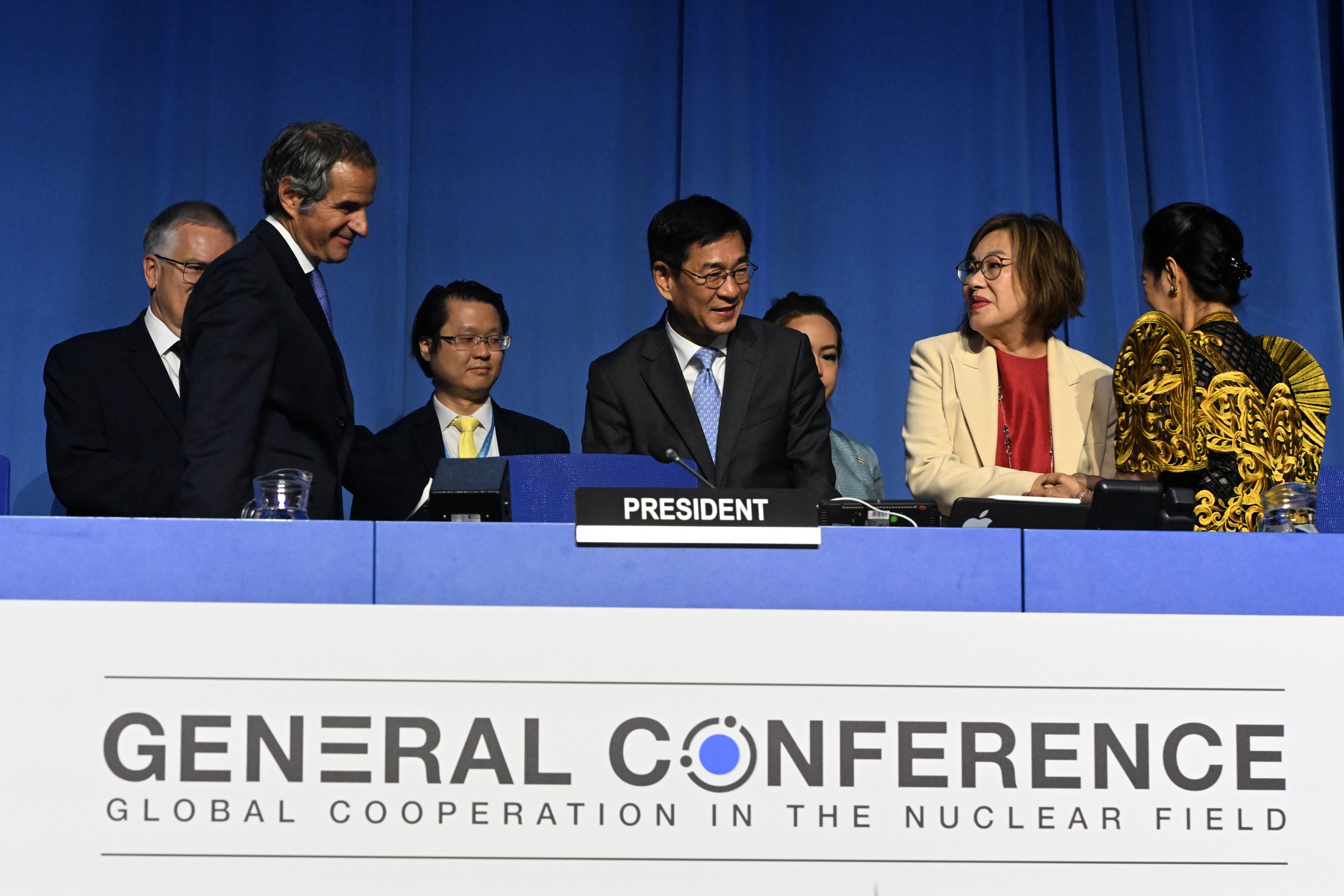
The International Atomic Energy Agency opens its 68th General Conference, which, among other topics, focuses on developing ways to expand nuclear power safely and securely. Such a conference embodies international efforts to prevent the uncontrolled deployment of nuclear weapons, efforts that may become more prominent in an era without clear limits on U.S. and Russian arsenals.
Photo Credit: Dean Calma / IAEA
A world with larger nuclear arsenals complicates arms control, as nations focus on securing second-strike capability — the ability to survive a nuclear strike and retaliate in kind — over non-proliferation, which further normalizes nuclear weapons as practical tools of conflict and persuasion. Undoubtedly, an absence of limits and transparency regarding nuclear weapons makes intentions harder to read and crises harder to manage, even without the large-scale buildups currently pursued by both Russia and the U.S.
That said, the end of formal bilateral arms control does not guarantee an arms race, as both sides seek to avoid expensive and potentially catastrophic nuclear buildup. Further, Russia and the U.S. have different approaches to nuclear force, so it is unclear why either nation would risk escalation; Moscow’s concern lies in preserving state sovereignty, while Washington’s is in maintaining flexible deterrence. Additionally, despite security concerns and strategic buildup, Trump and Putin have expressed a desire to avoid returning to unchecked nuclear proliferation. The NPT works to guarantee this by preventing non-nuclear-weapon states from acquiring nuclear weapons and encouraging nuclear-weapon states to gradually pursue disarmament. That said, experts point to U.S. and Russian ongoing nuclear modernization as a barrier to their compliance with this treaty, amplifying worries about an increasingly unsettled nuclear security environment. Although the NPT remains legally binding, it does little to constrain U.S. and Russian nuclear arsenals, positing only broad ideas with no timeline or numerical objectives for disarmament.
Ultimately, the danger of a world without a formal nuclear treaty between the U.S. and Russia lies not in the intentions behind the deployment of nuclear weapons, but in an inevitable action-reaction cycle. Without a formal agreement, non-proliferation and strategic stability rest almost entirely on political will, which may be difficult to obtain in an increasingly volatile and defensive security environment. As Washington and Moscow expand and modernize their nuclear deployments amidst geopolitical tensions, the global nuclear strategic landscape will likely be characterized by multi-polar buildup and novel weapons systems. This raises a relevant question from the Secretary of State for Arms Control and International Security, Thomas DiNanno: “how much deterrence is enough?”