Performing Peace: Trump, Nixon, and the Cynical Style of Politics Being Employed in Gaza
On October 9, 2025, Israel and Hamas formally agreed to a ceasefire agreement brokered by United States (U.S.) President Donald Trump, bringing an end to two years of prolonged conflict between the two nations. A few days later, on October 13, Hamas began freeing the remainder of the hostages captured in its October 7, 2023 incursion into Israel. Israel, likewise, began releasing the thousands of Palestinian prisoners it had detained in the course of the war. The war has resulted in the deaths of tens of thousands of Palestinian civilians and the physical devastation of much of Gaza. Trump’s 20-point peace plan sets out to rehabilitate Gaza and ensure a “peaceful and prosperous co-existence” between Israel and Palestine. “This is the end of an age of terror and death and the beginning of the age of faith and hope and of God,” Trump grandly announced in a speech to the Knesset, Israel’s Parliament. “This is the historic dawn of a new Middle East.”
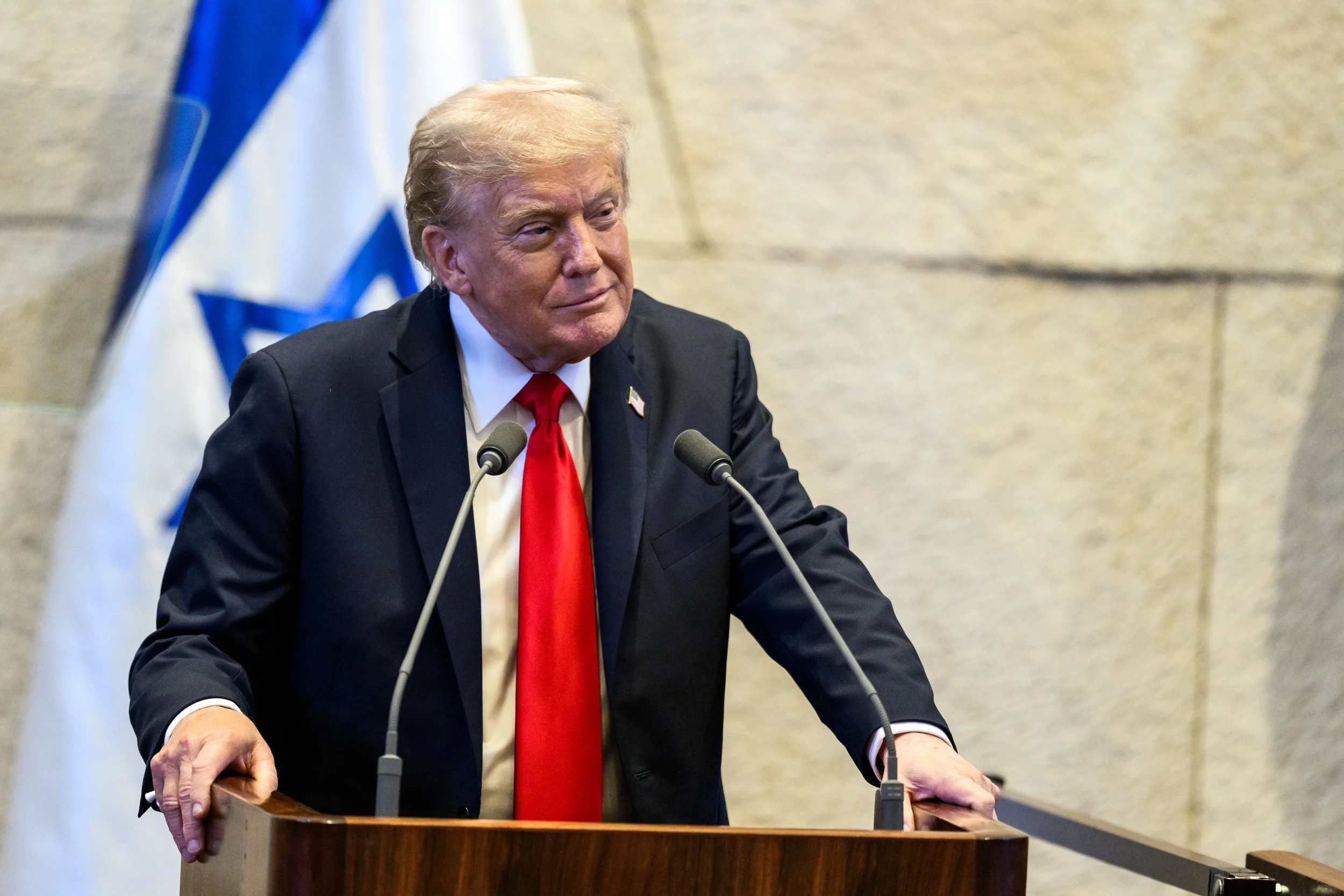
U.S. President Donald J. Trump delivering remarks to the Knesset in celebration of the U.S.-brokered ceasefire, October 13, 2025.
Photo Credit: The White House
The announcement bears resemblance to the now-infamous 1972 press conference hosted by U.S. National Security Advisor Henry Kissinger, in which President Richard Nixon’s Administration declared the imminent resolution of the Vietnam War. Building upon years of negotiations between communist North Vietnam and U.S-backed South Vietnam, Kissinger announced to the world that “we believe that peace is at hand.” The statement was delivered just days before the 1972 presidential election, in which Nixon would seek re-election in a campaign defined largely by the war.
But today, Kissinger’s announcement is remembered as a hollow overstatement. In private Oval Office meetings, Nixon and Kissinger acknowledged that the deal being negotiated between North and South Vietnam would do little to assure peace in the region. “Let’s be perfectly … cold-blooded about it [...] South Vietnam can probably never even survive anyway,” Nixon said to Kissinger. The important issue for the administration, rather, was to ensure the existence of a “decent interval” of time between American withdrawal and the imminent collapse of South Vietnam to avoid the appearance of having lost the war. “If we settle it [that is, withdraw] this October, by January ‘74 no one will give a damn,” Kissinger replied.
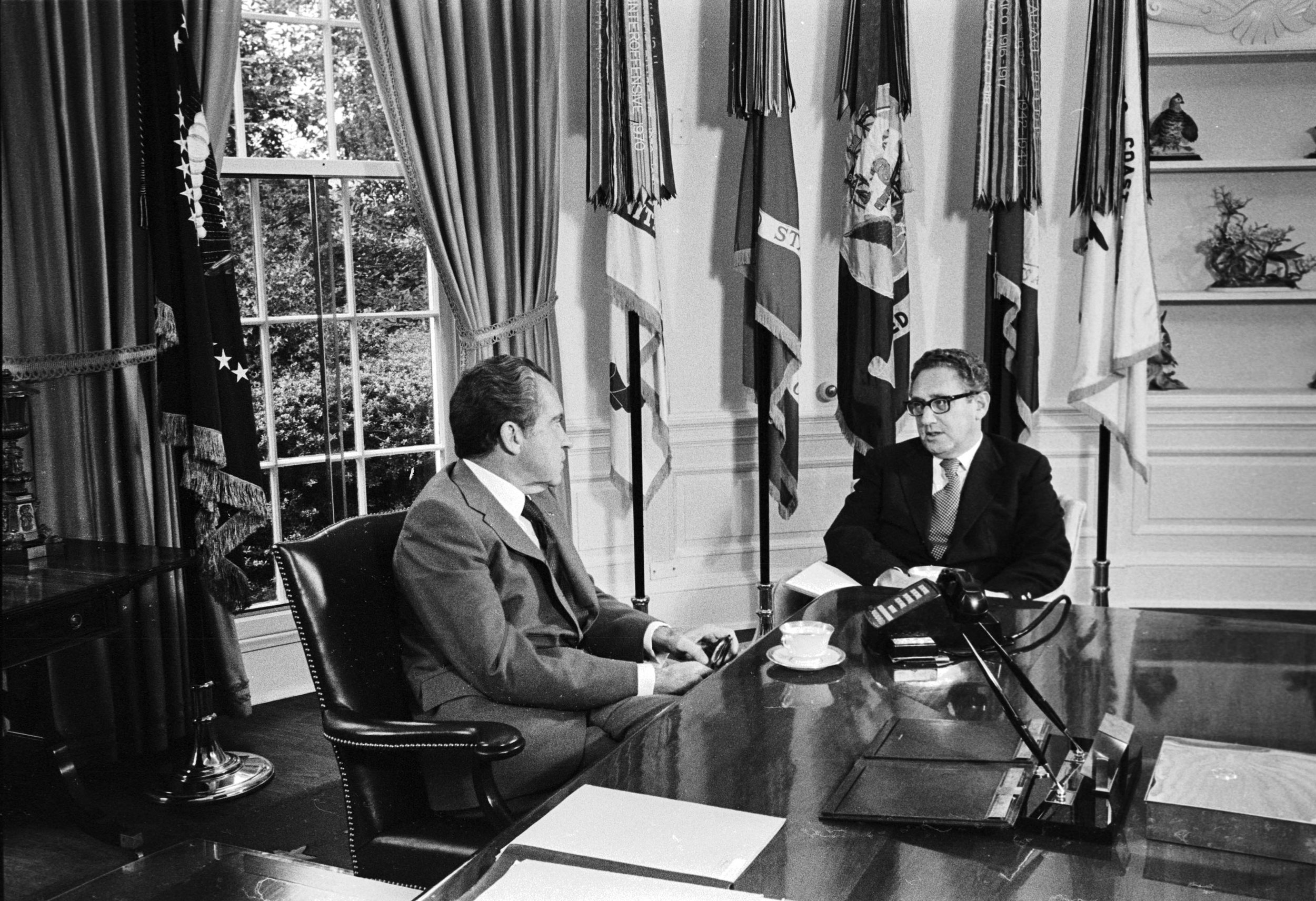
President Richard Nixon (left) and National Security Advisor Henry Kissinger (right) deliberating in the Oval Office, 1973. Although the duo managed to broker several historic diplomatic accomplishments, the amoral means they used to advance their foreign policy have been widely criticized.
Photo Credit: Central Intelligence Agency
The gamble ultimately worked. Nixon won re-election in among the greatest electoral landslides in American history, due in no small part to the public’s approval of his handling of the war. But the announcement itself would prove dreadfully premature: the U.S. would only withdraw in March of the following year and the war would last until South Vietnam collapsed in 1975, during which time thousands of people would die. In retrospect, Kissinger’s announcement seems less like a sincere gesture at peace than a shrewd political maneuver designed to benefit Nixon at the polls.
We now face a similar situation with Trump’s declaration of peace in Gaza. The ceasefire brokered by the Trump Administration is admittedly a remarkable feat. But, significant questions remain about the implementation of the plan, and progress has been slow with respect to many of the plan’s core objectives. These shortcomings beg the question of whether the administration is really interested in peace as an objective good or, rather, seeks to further its own interests. The record suggests that the cynical strain of international politics embodied in such a reviled figure as Nixon has been embraced by the second Trump Administration: greed seems to drive the administration’s diplomatic efforts, and the performance of peace in Gaza has been valued over its actual achievement.
The Dim Prospects for Peace in Gaza
An essential component of the peace deal includes the redevelopment of Gaza and increased aid flows to the region to stem the ongoing humanitarian crisis. But despite being given roughly three months, little progress has been made. Current conditions in Gaza are frankly inhumane: October estimates list 81% of buildings in the region as damaged or destroyed, rendering approximately 1.2 million Palestinians homeless. Rebuilding Gaza will cost an estimated $70 billion, and it remains unclear who would be willing to foot the bill: few countries or donors are willing to invest in a region which at any moment could again break out into conflict. Other issues such as widespread physical disability, a lack of healthcare services and the looming threat of famine continue to plague the region and make life a living hell for millions of Palestinians.
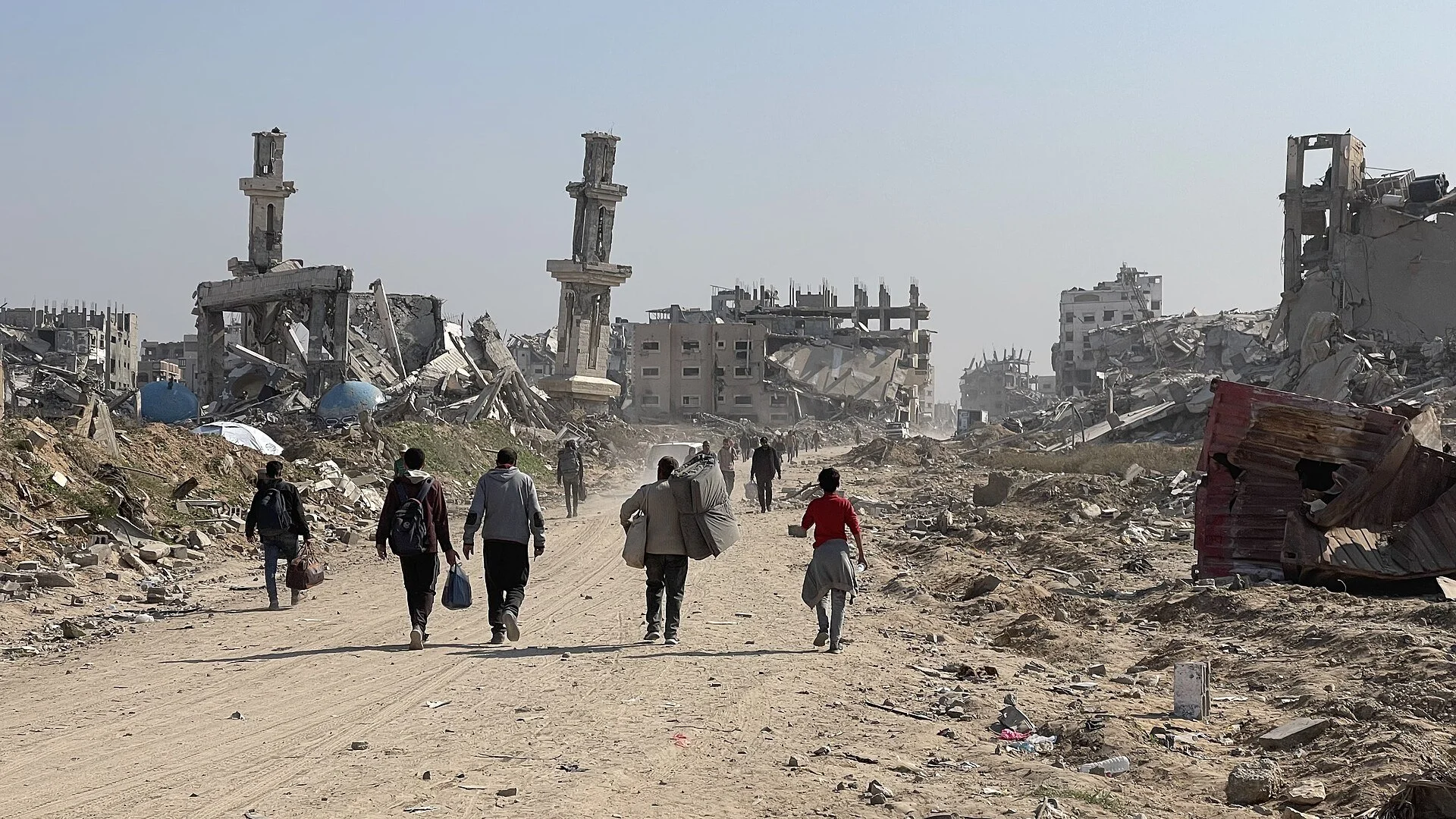
Gazans traveling through an area decimated by Israeli strikes, January 29, 2025. Under the terms of the U.S.-brokered peace plan, it remains unclear how the reconstruction of Gaza is to be funded and, thus, when the suffering of the Palestinian people might end.
Photo Credit: Jaber Jehad
As it stands, there exists no formal mechanism for the Palestinians to influence how Gaza is to be rebuilt. The plan instead assigns an international “Board of Peace,” chaired by Trump and staffed with his hand-picked appointees, to govern Gaza until reform is achieved. There is widespread concern that this board will be dominated by foreign interests rather than serving the Palestinian people.
As Palestinian journalist Mohammed R. Mhawish opined, under the current terms of the plan, Gaza is to become a “security-first regime, where aid, reconstruction, and ‘transition’ are subordinated to Israeli security metrics under the oversight of the U.S. and its partners.” If the peace plan is to succeed, however, it will need the support and cooperation of the Palestinian people, lest Hamas or some other faction gain influence and steer the region away from peace.
In fact, Hamas is currently in the process of reconsolidating its hold in Gaza. It is advancing into areas from which the IDF has retreated, as well as assassinating members of rival factions who were poised to take advantage of the political vacuum created following the decimation of Hamas’ military. Though Israel demands that Hamas be disarmed prior to its withdrawal from Gaza, Hamas leadership flatly refuses to and likens such a move to “removing the soul” of the group. The body tasked with disarmament as per the deal—the International Stabilization Force (ISF)—is not yet functioning. Add to this the fact that Israel continues to conduct strikes on Gaza, killing over 486 Palestinians since the supposed ceasefire, and real peace seems terribly unlikely.
Profiting From Peace?
What, then, was the administration’s intention in drafting this plan, which announces peace but is so far from actually accomplishing it? In the eyes of some, the answer is the administration’s own financial interest. Many have noted the significant business ties between the Gulf states and the corporations run by Trump and those in his inner circle. There is, of course, the Trump Organization’s portfolio of resorts, golf courses and real estate across the Middle East, which has only expanded since Trump took office. These ventures frequently conduct business with real estate firms and entertainment companies backed by the Arab governments themselves, enriching both parties. More brazenly, Trump has directly benefited from these firms’ million-dollar investments into his assets. This is all possible because, in his second term, Trump has shied away from signing onto a customary pledge which would prevent him and his businesses from striking deals with foreign companies.
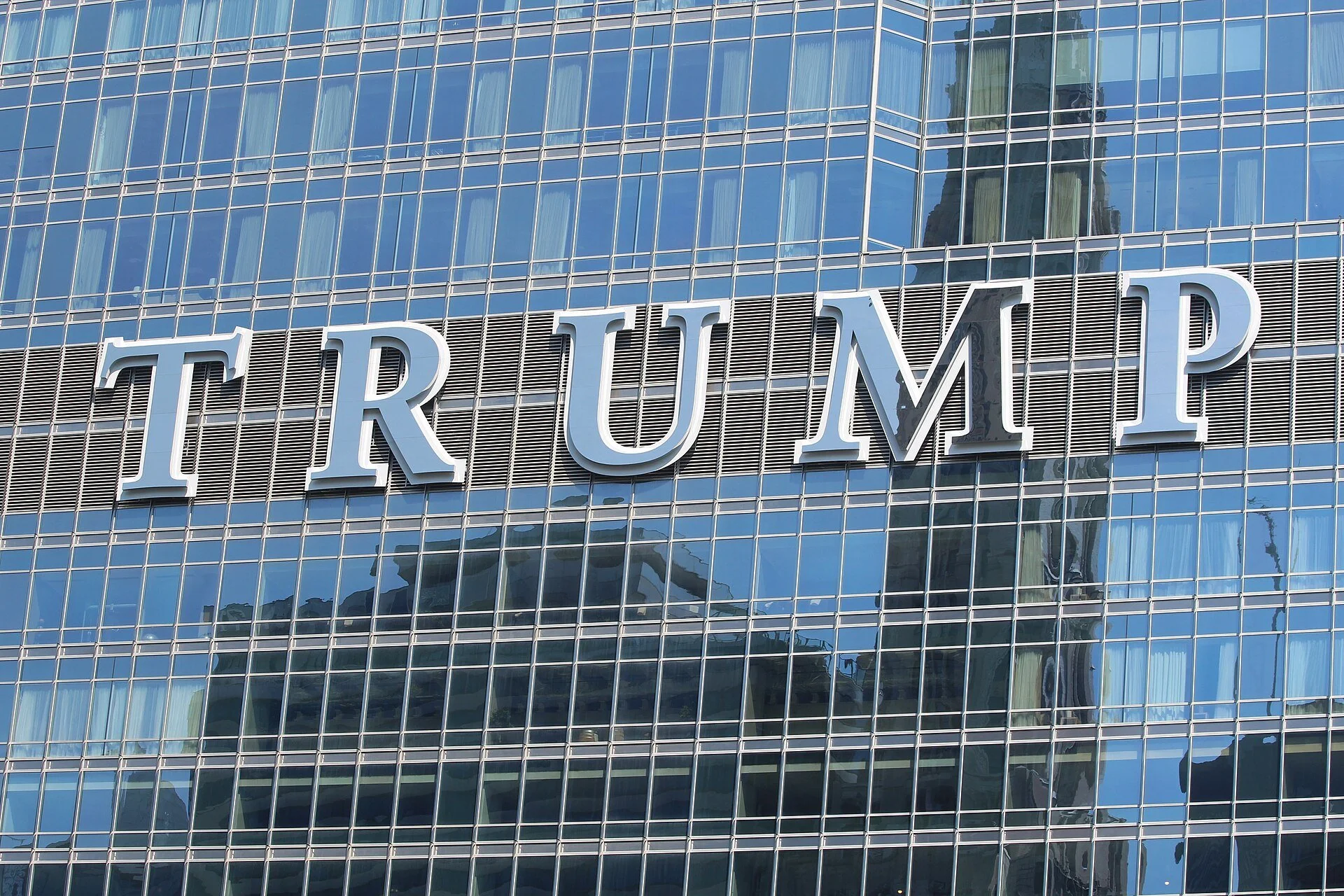
A photo of the Trump International Hotel & Tower in Chicago. The Trump family’s business interests in the Middle East have multiplied since he took office one year ago, presenting major conflicts of interests with regards to his foreign policy.
Photo Credit: TonyTheTiger
Indeed, some don’t regard it as a coincidence that Trump compelled Netanyahu to bring an end to the war only when Israel conducted its September 9 strike on Doha, Qatar; a move potentially jeopardizing Trump’s business interests in the region. “The lines are blurred in ways almost never seen before in the US,” asserted Mohamad Bazzi, director of the NYU Hagop Kevorkian Center for Near Eastern Studies. The Arab countries, Bazzi continues, want to stay in Trump’s “good graces” by keeping “money flowing to the US and to his own family business as well.” Although the Trump Administration denies that its business dealings have in any way influenced peace negotiations in Gaza, the record is less than clear.
Investigating Corruption
It is again worth invoking the historical example of Nixon. As a presidential candidate in 1968, Nixon feared that a peace treaty signed before the election might give an edge to the Democratic nominee. So, he ordered his liaison in South Vietnam, Anna Chennault, to begin pressuring the government there to stall negotiations until the election was over. “Hold on, we are gonna win,” Chennault told the South Vietnamese President days before election day. The implicit promise to the South Vietnamese was that Nixon, if elected, would work to secure better terms for them prior to American withdrawal. Accordingly, the South Vietnamese delegation continued to ask for terms which North Vietnam could not possibly accept, and a ceasefire was forestalled until 1973. The incident, now known as the “Chennault affair,” is regarded by some as a scandal that equals Watergate in its criminality.
If this history is to mean anything at all, then it should prompt us to investigate any incident in which diplomacy appears to be sidelined for personal gain. It is thus terribly unfortunate that investigations into Trump’s business dealings have been either stalled or preempted. For instance, the Senate Finance Committee’s investigation put aside its investigation into the business dealings of Jared Kushner, Trump’s son-in-law, when Republicans gained control of Congress last election cycle. Unlike Nixon, the private transcript with regard to Trump’s dealings in the Middle East has not gone public, and it cannot definitively be said that Trump’s push for peace in Gaza amounted to a quid pro quo with the Arab governments. But, the fact that such ambiguity remains provides all the more reason for such charges of corruption to be investigated.
Reviving Nixon, Normalizing Trump
It is quite remarkable that, in recent years, many conservatives have come to regard Nixon as an underrated president, and even a model for the modern conservative movement. On podcasts and social media, conservative influencers celebrate Nixon’s accomplishments, such as his foreign policy with regards to the Vietnam War and his easing of relations with the communist powers. They also extol his deep mistrust of the federal bureaucracy, even going so far as to label the Watergate scandal a “setup” corroborated by government elites.
The attempt to revive Nixon seems rather surprising at first. But, Nixon’s transactional, deeply-cynical approach to international politics is something which Trump is emulating in many respects. It was Nixon whose bombing of neutral Cambodia during the Vietnam War resulted in tens of thousands of civilian deaths, and it was his CIA which helped oust Chilean President Salvador Allende and instate the brutal, anti-communist dictator Augusto Pinochet. Refashioning these tragedies as accomplishments would give Trump a historical basis on which to ground, for instance, the extrajudicial killings of civilians at sea or the seizure of the president of a foreign country.
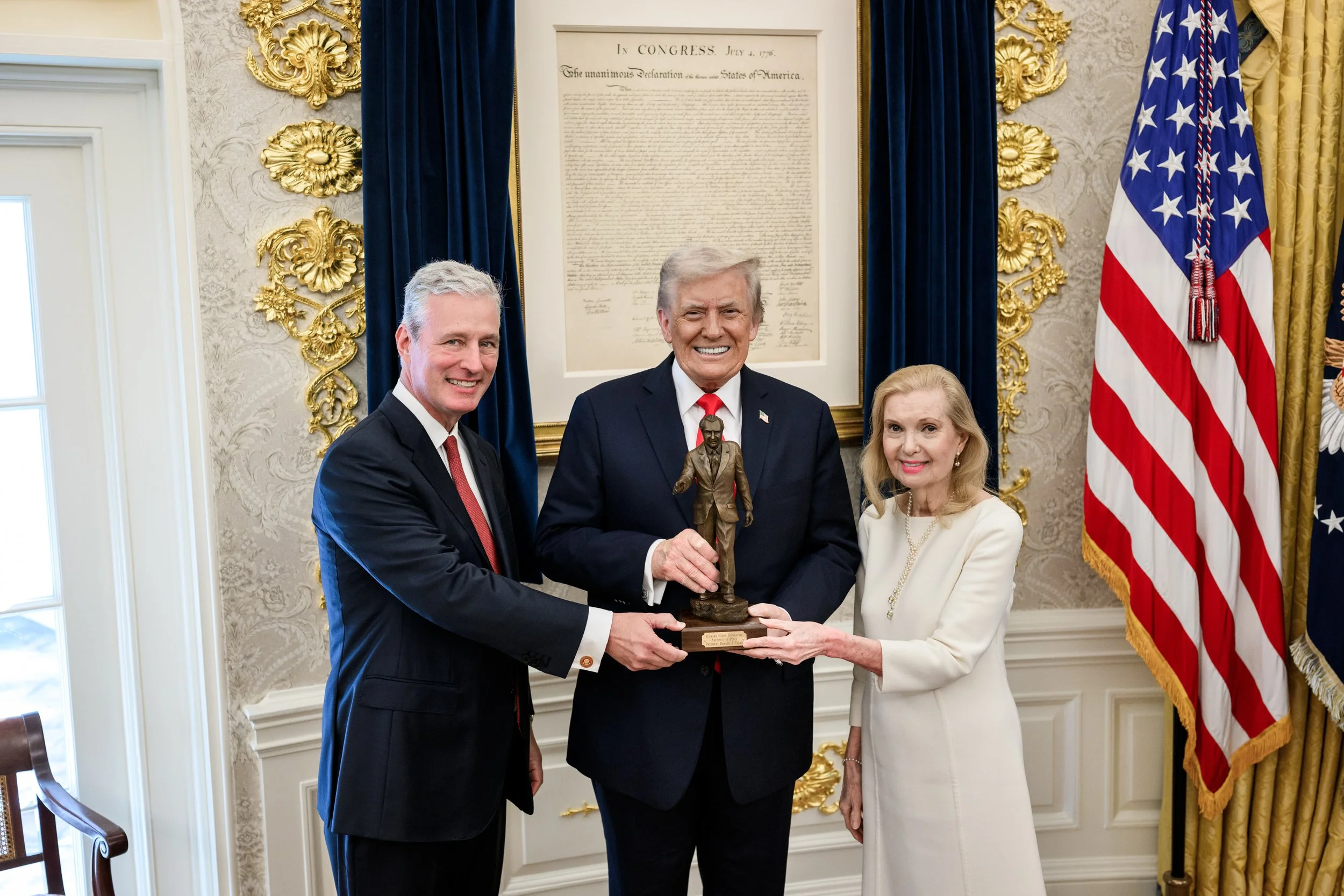
Trump being presented the Richard Nixon Architect of Peace Reward by Foundation Board Chairman Robert C. O’Brien and Tricia Nixon Cox, October 21st, 2025. In an obscure attempt to normalize Trump, present day conservative politicians are emphasizing the similarities he shares with Nixon.
Photo Credit: The White House
Corruption and Accountability in Gaza
President Trump’s self-interested, cheapened form of politics is really nothing new in the historical sense. Trump is violating precisely the same norms and legal codes which were enacted to guard against the moral and political corruption embodied in the Nixon Administration. What is new, rather, is the fact that the Trump administration is hardly making an effort to cover up its tracks; instead, it seems to revel in its cruelty and to wear each scandal it accumulates as a badge of honor. “In today’s polarized America, scandals hurt less, fade faster and rarely end political careers,” political scientist Brandon Rottinghaus has argued.
With reference to Gaza, this likely means that, in the short term, Trump’s peace plan will be implemented without receiving thorough scrutiny from American voters. It means that millions of Gazans—the victims of two years of devastating bloodshed and destruction—will have little say in how their homes and communities are rebuilt. They will instead be subject to the whims of foreign rulers, who even in peace fail to provide them with aid and security. It is also probable that Trump will be able to reap the political and financial rewards that come with declaring peace in Gaza without genuinely achieving it. But, there are some positive steps forward which can be taken.
Many persuasively argue that holding Trump accountable requires us to be willing to criticize corruption wherever it exists, regardless of who the actors are. Calling out corruption only when practiced by the opposition results in a political environment where the charge of “scandal” is reduced to an insult slung at one’s rivals. Although the foregoing analysis examined the corrupt worldview exhibited by two Republican administrations, attention should not be deflected away from those incidents of corruption across the U.S. political spectrum. Democrats have a significant corruption problem as well. If opposition to Trump manages to take on a principled, across-the-board anti-corruption bent, then I believe that a more nuanced and sensitive foreign policy might be advanced in the Middle East. The future stability of the region and the lives and well-being of millions of Gazans rests on such a possibility.
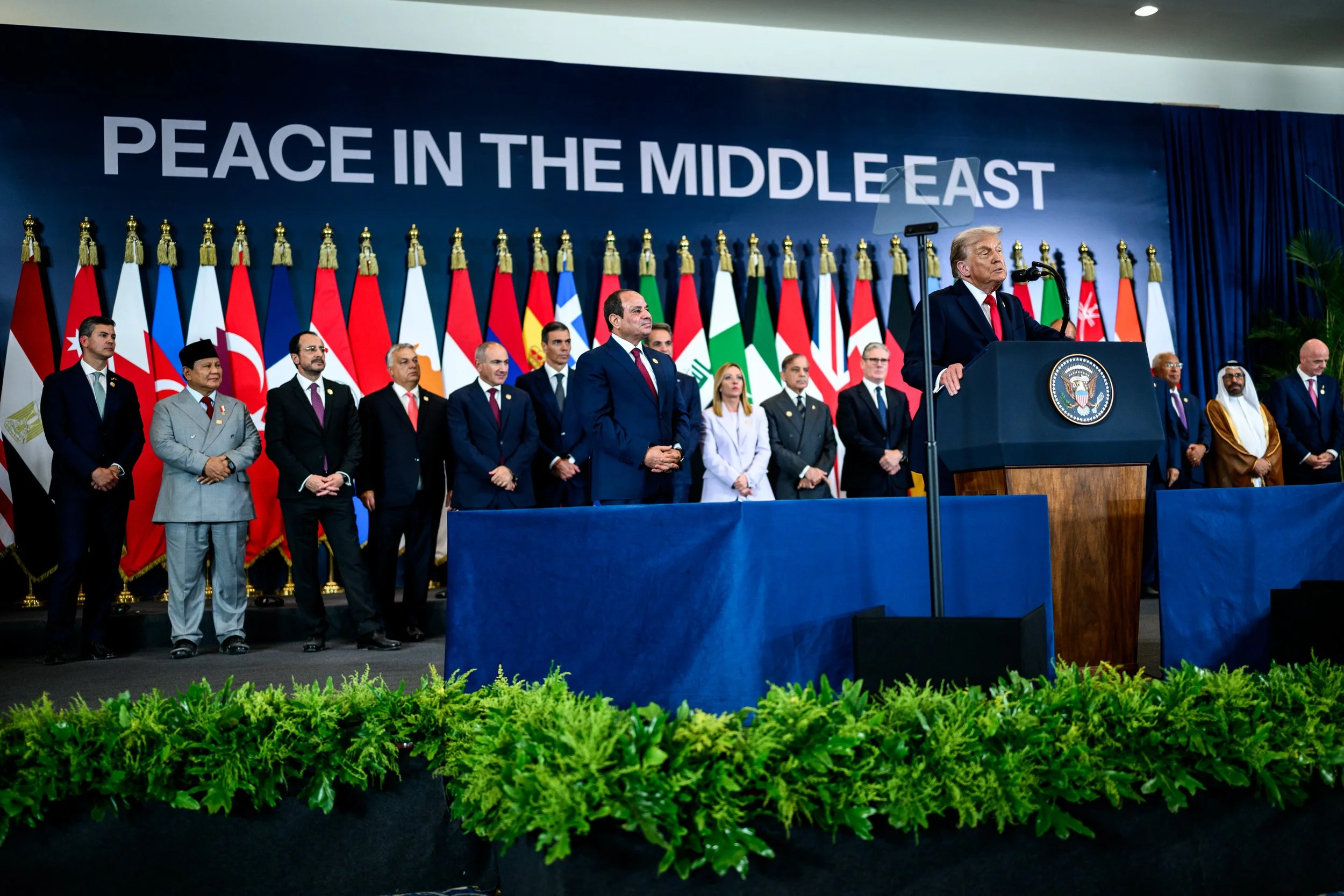


Trump delivering remarks to a summit of world leaders in Sharm El Sheikh, Egypt, days following the signing of the current ceasefire in Gaza, October 13th, 2025. Though a sizable achievement, the plan’s practical ineffectiveness leaves the administration vulnerable to criticisms that its diplomacy was motivated largely by self-interest.
Photo Credit: The White House