Big Questions from a Bleak Situation: How Britain's Century Old Political Traditions Collapsed Overnight and Where they Might be Going Next

A police van in Southport burns during a wave of mass riots across the U.K. in 2024. After three children were murdered at a dance class, false rumours that the perpetrator was a Muslim asylum seeker led to an outbreak of violence against immigrant-owned businesses and hotels suspected of housing refugees. Unsurprisingly, Nigel Farage MP led the charge.
Photo credit: StreetMic LiveStream
News from the United Kingdom (U.K.) seems exceedingly bleak these days: a staggering public debt, a spiraling trade deficit and a rapidly aging population with ballooning welfare spending to match. With the loss of the country’s closest trading partners, a global pandemic and a sudden spike in oil prices comes the crisis that looms over Britain.
Meanwhile, the governing Labour Party has done in a year what it took the rivaling Conservative Party 14 years to achieve: the complete collapse of public support in the government. They have repeatedly U-turned on their own legislation – from abandoning their stance on the definition of womanhood to raising the inheritance tax. Meanwhile, their attempt at a hardline immigration policy has failed to appease the right and further isolated their base on the left.
To further compound the U.K. Prime Minister Keir Starmer's problems, his appointee as United States (U.S.) ambassador, Lord Peter Mandelson, has been arrested while under investigation for handing out state secrets to convicted pedophile Jeffrey Epstein. As we speak, the Prime Minister is fighting for his job in Parliament after it was revealed that Mandelson failed his security vetting but was appointed anyway. The local council elections, which will be held on May 7, are often seen as referendums on government performance and every pollster is broadcasting the same result: Labour should prepare itself for a bruising.
Britain's economic woes have been written on the wall for over a decade, but after only a year in office, Starmer’s approval rating lies at a measly 19% – lower than any other prime minister on record. Equally, the Tories of the Conservative Party have failed to transform this dissatisfaction into support, somehow polling even lower than the country’s most unpopular premier. These two parties have been the only political forces to hold executive office since 1922, yet now face the possibility of electoral extinction. While local elections won’t impact the makeup of the House of Commons, losing control of city councils would severely weaken party strength, placing them both on an even greater backfoot ahead of the general election in 2029.

Uh oh… Prime Minister Keir Starmer (R) laughing with disgraced ex-Labour spin doctor and Epstein accomplice Lord Peter Mandelson. Scrutiny over Mandelson's appointment as Ambassador to the U.S. has haunted his boss’s premiership since January and may well be the final straw for Starmer’s remaining supporters.
Photo credit: Number 10
As the political center collapses, public support has fled to the fringes with the empowerment of the Greens, the Green Party of England and Wales, picking up disillusioned support from Labour's left and Reform UK taking up the Tories’ immigrant fearmongering and populism. Reform leader Nigel Farage sits comfortably ahead across most national polls. He has made it very clear that should his team of inexperienced crooks and Tory defectors seize power, their first actions would be tearing up the U.K.’s main human rights legislation, reneging on the current Northern Ireland peace agreement and making fear and hatred the key drivers of policymaking.
Meanwhile, the Greens have catapulted themselves into the national limelight by winning their first Northern seat in parliament at the Gordon and Denton byelection. In reaction, their leader, Zack Polanski, has come under increasing media scrutiny for positions such as peace in Palestine, an end to the war on drugs and higher tax rates for the uberwealthy. Both Reform and the Greens wield only a handful of seats in Parliament, so if they were to seize control of councils from Labour and the Conservatives, it would mark a staggering political upheaval and bring hundreds of new faces into local governance.
Implicit within support for either Reform or the Greens is the willingness to catapult a party with no governance experience into the top job within the next few years. For all of last summer, it was Farage's fearmongering of cities overrun with migrant crime and schools brainwashed with so-called transgender ideology that seemed destined to sweep across the nation. With his staggering lead above Labour throughout 2025, the country witnessed race riots based on made-up Facebook posts, a nationwide vandalism campaign to turn any white surface into the St George’s Cross and the team up of two of the world's worst, Elon Musk and convicted fraudster and fascist Tommy Robinson, in fuelling both the ignorance and anger of the rioting crowds.
But within only a few months, the Greens, an entirely antithetical, eco-populist party, have grown to mount a serious challenge to Reform’s electoral success. Perhaps then the British public is not ideologically committed to Farage or his attempt to produce British MAGA, but is instead frustrated with the traditional center and enticed by those with vision to redesign the status quo. So why has Labour failed to create an appetite for moderate change, and how might politics be able to save itself from this crisis of faith?
The last decade of British politics may be understood as an utterly unrealistic soap opera. After all, every prime minister in the period has fled No. 10 in total disgrace. First, former Prime Minister David Cameron spent six years gutting funding from every major social service before quickly abandoning ship after the Brexit referendum he called buried his political legacy in 24 hours. After the flight of “Dodgy Dave,” the shattered Conservative Party was tasked with negotiating the best Brexit deal possible despite half of the remaining party, and the prime minister, voting against the idea in the first place.
Two years of humiliations, resignations and open rebellion later, former Prime Minister Boris Johnson briefly repaired party popularity before being caught holding parties at No. 10 as the rest of the country stayed locked in their homes due to COVID-19 safety restrictions. Next, former Prime Minister Liz Truss and her tax-cutting Mini-Budget were so catastrophic that the Pound fell to its lowest exchange rate since 1971, and she resigned after only 50 days in office, losing a livestreamed battle against the shelf life of a lettuce. Finally, Rishi Sunak led the Tories in their worst electoral defeat in 2024, casting himself and his party to the dustbin of history.
While it was clear to every pundit in the country that the Conservatives had signed their death warrant by 2024, they also ultimately took faith in the entire political establishment with them. Many politicians were branded as liars, turncoats, incompetent buffoons or all of the above. Furthermore, the current Conservative shadow cabinet is dominated by political novices after a decade of scandal brought down the big names of the previous generation. When Starmer came into office, he inherited not just a bankrupt state apparatus but a societal belief that the government was ineffective.
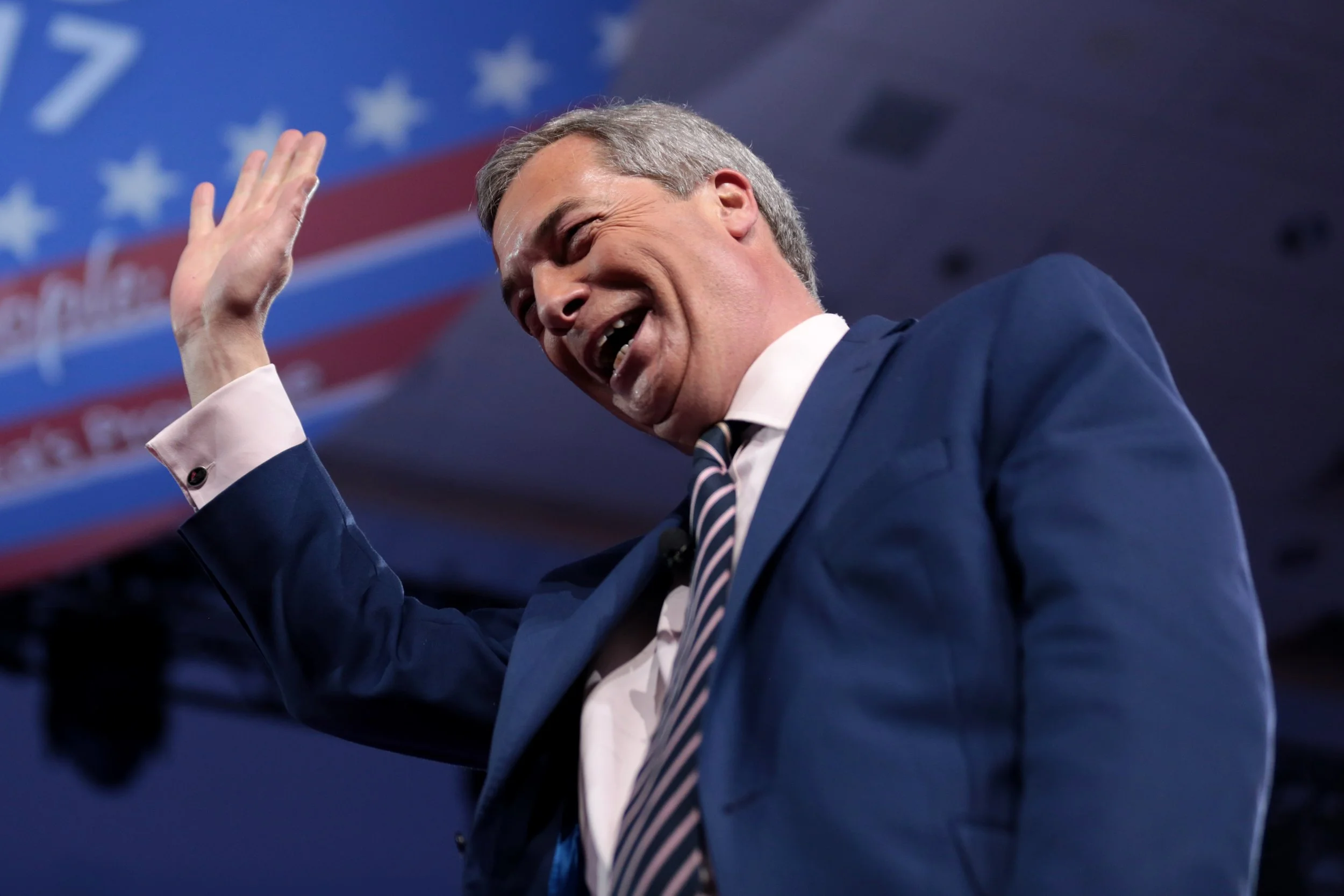
Nigel Farage speaking at the Conservative Political Action Conference in 2017. After achieving his lifelong dream of pushing the U.K. out of the EU, good ol’ Nigel almost immediately decided to seek work across the pond as a U.S. political commentator. Strange…
Photo Credit: Gage Skidmore
While the scandals of the last year may seem banal when compared to the chaos of the Conservative years, the continuing stream of dodgy tax affairs, backroom appointments and government division breeds a political nihilism that asks an unsettling question: what if there is nothing anyone can do? What if the whole structure is simply rotten from the ground up? It is in this atmosphere that a character like Farage can arise. He appears almost immune to criticism, since he's built a career on controversy. Those in the U.K. old enough to vote may recall when he was accused of chanting Hitler Youth songs at a school, when his own bank dropped him for being “a disingenuous grifter” or when the leader of Reform Wales was jailed for taking Russian bribes.
The list of callous remarks and rancid behaviour goes on. But judging by the size of the far-right “Unite the Kingdom” rally last year, plenty of Brits support “good old Nigel” and his campaign of unapologetic nastiness. Reform’s capacity to govern is not the reason for its steamrolling support. Since the last election, Farage has lost over 60 councillors to resignations, defections and direct expulsions. As such, support for such a brazenly incompetent party of fear peddlers represents a deeper national impulse to reject establishment party politics and implement something far more unsettling in its stead.
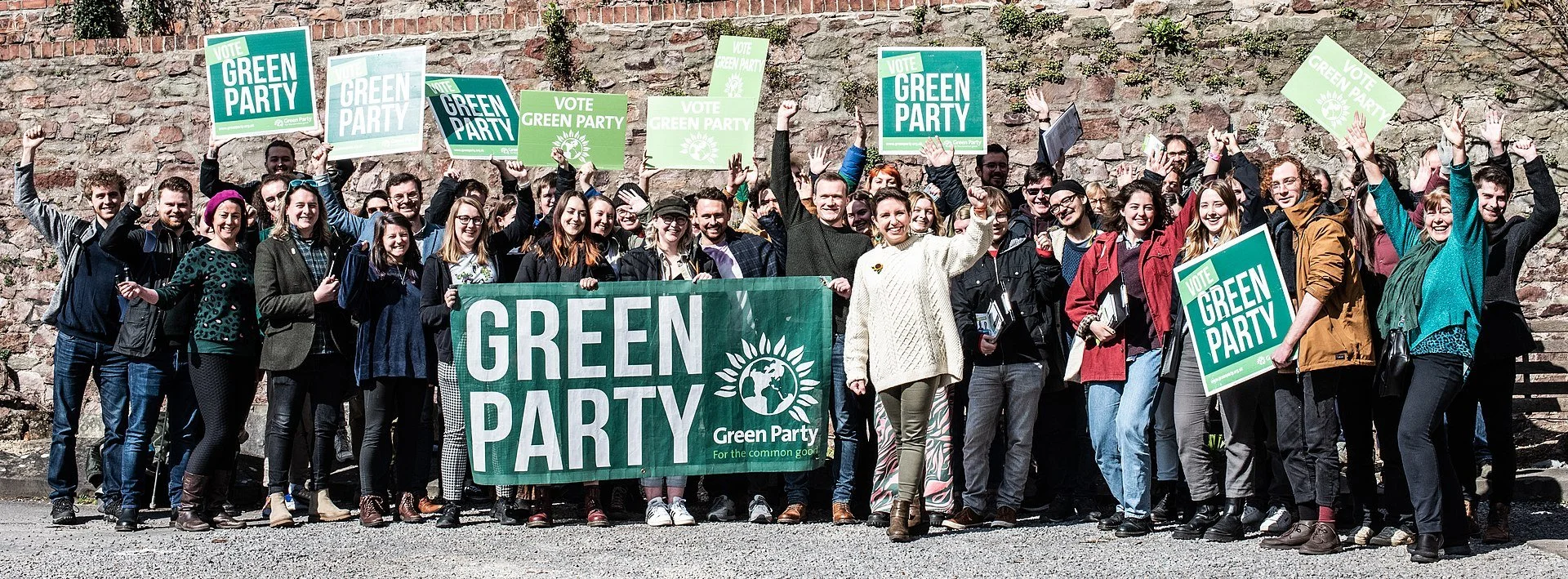

The Green Party faces an uphill battle to be treated like a serious political force. But for the first time in a long time, an openly socialist platform is gaining momentum against the political center. Should it continue, Britain may be on its way to becoming a five party system.
Photo credit: Bristol Green Party

Keeping human decency at the heart of government – and keeping a man who chanted “Big Chungus” on the internet for money out – seems an important redline for safeguarding British democracy. In the face of Reform’s campaign of hate, the Greens are seemingly trying to present a lesson: in a time of nihilism and disengagement, only an openly radical and aggressive platform for change will capture the public imagination. Keir Starmer is already a dead fish in a barrel and will be made to get out of the way for a new Labour leader probably sooner rather than later, but his successor cannot simply pick up the reins and keep plodding onwards. The people of Britain are aching for a bold reimagining of what society could be, and if the center refuses to produce one, it will be swept out with the tide and replaced with a far more uncertain future.